

Hot Ports, Cool Ship: Viking Vesta Sails from Athens to Venice
Ten years ago, when Viking’s ocean fleet consisted of precisely two ships, I wrote about how the company was translating its enormously successful river-cruise formula to the open sea. Viking Star and Viking Sea had already won impressive accolades, but fleets—and reputations—are not built on first impressions alone.
This summer, sailing aboard Viking Vesta from Athens to Venice, my partner Andrew and I discovered what a difference a decade makes—and how remarkably little Viking has altered the principles that made those first ships so successful.

Viking Vesta was the 12th sister ship to join Viking’s ocean fleet. Appropriately, Vesta was the Roman goddess of the hearth and home. By the end of our voyage, home was precisely what the ship had become.
At 784 feet, Vesta is 39 feet longer than Viking Star and accommodates 998 passengers—68 more than her predecessors—in 499 all-veranda staterooms. Yet Viking has expanded without violating the cardinal rules that define the company: no casino, no ship’s photographers, no children under 18, and none of the razzmatazz that has turned certain modern cruise ships into shopping malls with propellers.
You would never know those additional passengers were aboard. Viking specializes in something increasingly precious at sea: space. Nobody needs to rise at dawn to claim a deck chair. Nobody has to flag down a waiter.
There are moments when passengers may reasonably ask, “Where has everyone gone?”
If there is a disadvantage to all this glorious breathing room, it is what might happen when Viking is someone’s first cruise. Eventually, that traveler will discover that Viking is the exception rather than the rule.
When Europe Turned Up the Thermostat
This was an extraordinarily hot summer in Europe. On our voyage from Athens to Venice, calling at Katakolon and Corfu in Greece, Kotor in Montenegro, and Dubrovnik and Split in Croatia, the heat followed us relentlessly.

At every port, Viking Vesta awaited us like a beautifully air-conditioned Scandinavian embassy. Her cooling system never failed. Her two pools offered afternoon deliverance. Her hot tubs, unsurprisingly, had all the appeal of a wool overcoat. Staterooms became cool cocoons, while balconies were best enjoyed early in the morning or after sunset. The number of Aperol Spritzes consumed aboard may have rivaled the combined output of bars from Amalfi to the Adriatic.
Vesta became a floating advertisement for the “coolcation,” the increasingly sensible practice of visiting Europe outside the fiercest summer months. Viking offers Mediterranean voyages during spring, autumn and even winter—months once considered beyond the traditional cruising season and which now look increasingly seductive.
Ancient Stones in 104 Degrees
From Katakolon, we traveled through a strangely unfinished-looking landscape, its main road lined with buildings that appeared to have been abandoned somewhere between architectural ambition and actual completion.
Then came the UNESCO World Heritage emblem. I am always delighted to see it. After enough years of travel, those UNESCO sites begin to feel like badges earned—although no one has yet provided me with the sash on which to display them.
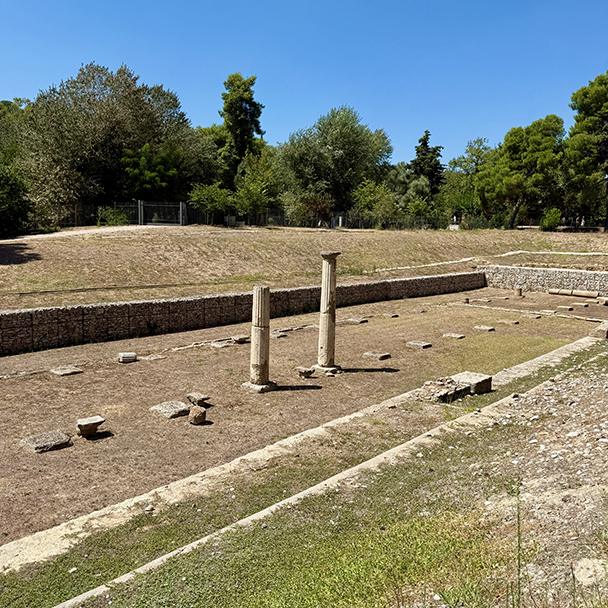
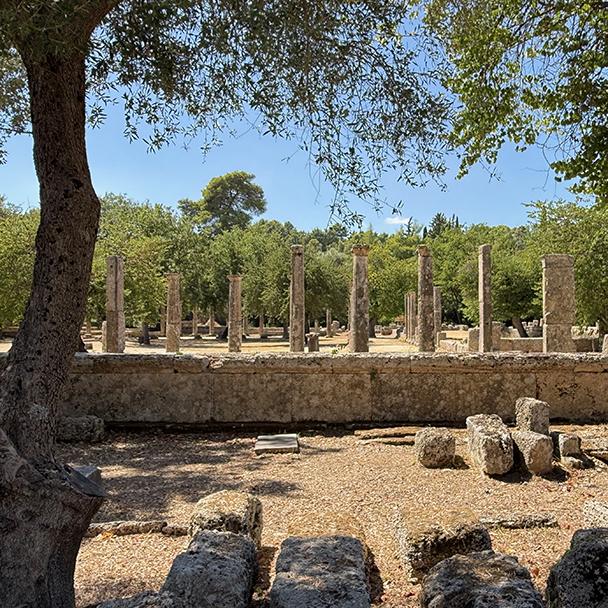
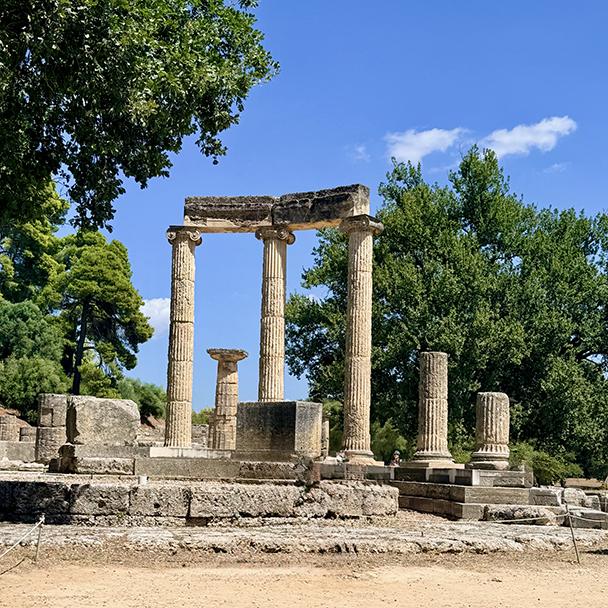
Ancient Olympia hosted its first recorded Games in 776 B.C., and its importance to Western civilization is indisputable. Its visual impact, however, requires imagination. On a 104-degree (Fahrenheit) afternoon, we encountered a surprising number of ancient stones lying about looking considerably cooler than we felt.

A UNESCO World Heritage sign marks the archaeological site of Olympia in Greece. Credit: Monte Mathews The remains of ancient Olympia’s stadium complex reveal traces of the site where the ancient Olympic Games were held. Credit: Monte Mathews Rows of ancient columns stand among the ruins of Olympia, Greece. Credit: Monte Mathews Reconstructed Ionic columns rise among the ruins of ancient Olympia, Greece. Credit: Monte Mathews The ceremonial site at ancient Olympia where the Olympic flame has been lit since 1936 and where it is scheduled to be lit again for the 2028 Olympic Games in Los Angeles. Credit: Monte Mathews
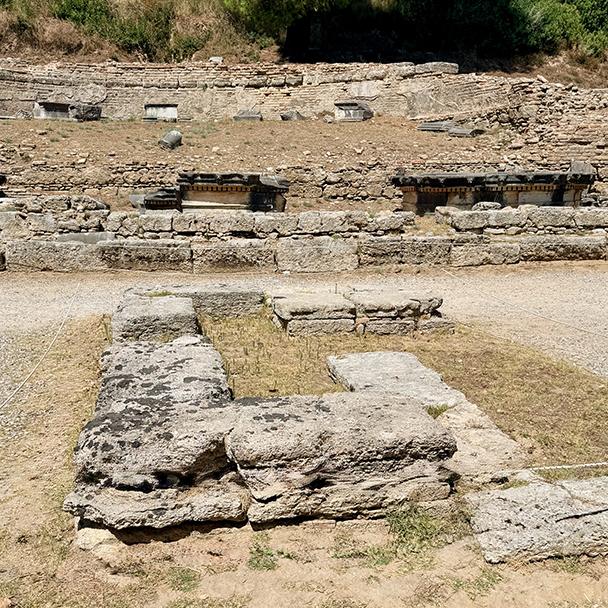
The most historically complicated stop was the site associated with the Olympic flame. The first modern torch relay began here in 1936, carrying the flame to the Berlin Games staged by Nazi Germany. The ceremony site itself is singularly unimpressive, especially considering the global ritual it launched. Still, Olympia is one of those places one feels compelled to see—and afterward may check off the list with a damp but definite sense of achievement.
A Better Day in Corfu
Corfu had improved vastly since my last visit—or perhaps Corfu and I had simply caught each other on a better day.
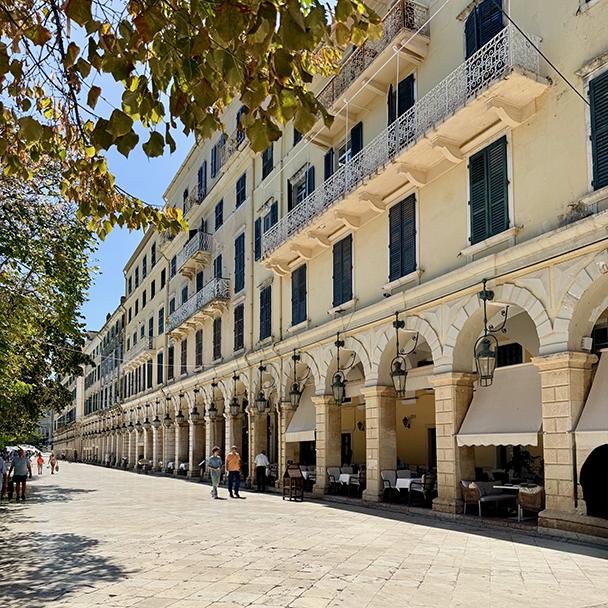
The old town remains an engaging mixture of Venetian, French and British influences, but our most delightful discovery was lunch beneath the arcades of the Liston. Their resemblance to Paris’s Rue de Rivoli is no coincidence: the promenade was constructed during the French occupation of Corfu and deliberately modeled upon it. Sitting beneath those elegant arches with an excellent lunch and my drink of choice the ubiquitous Aperol Spritz, I began to wonder whether Corfu had changed or I had merely failed to order properly the first time.
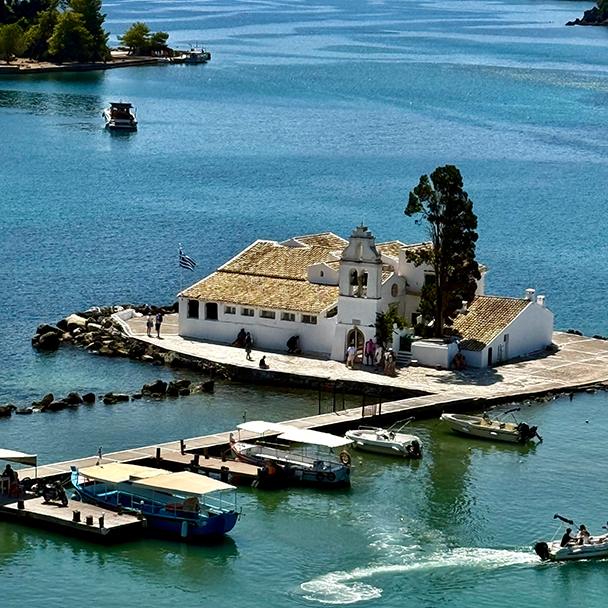
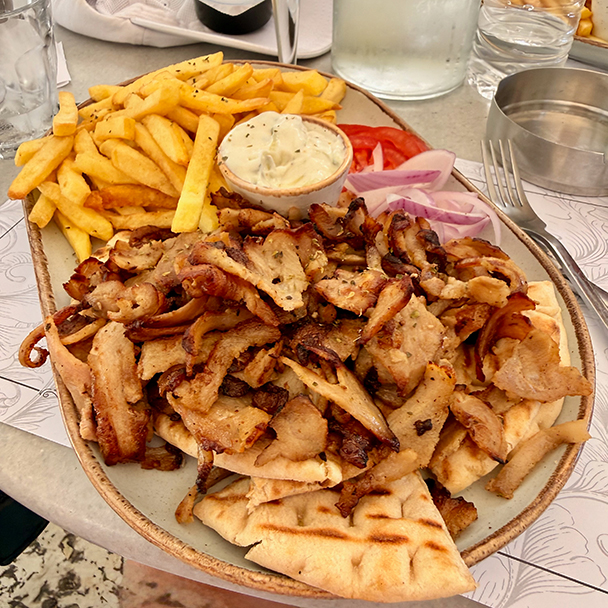
Vlacherna Monastery sits on a tiny islet off Corfu’s Kanoni peninsula. Credit: Monte Mathews The Liston’s elegant arcades line Spianada Square in Corfu Town, drawing inspiration from Paris’s Rue de Rivoli. Credit: Monte Mathews A generous plate of grilled gyros is served with fries, pita, tzatziki, tomatoes and red onion in Corfu. Credit: Monte Mathews
A 78th Country Reveals Itself
I awoke early for Viking Vesta’s gentle passage from the open Adriatic into the Bay of Kotor. Andrew remained sensibly in bed, but I stood on deck as the water narrowed and the mountains rose around us, their villages, churches and stone houses gradually emerging in the morning light.

There are destinations that announce themselves with noise and spectacle. Montenegro did precisely the opposite. It revealed itself slowly, peacefully and with an almost theatrical sense of timing. By the time we reached Kotor, I had arrived in the 78th country I have visited—and it immediately felt magical.
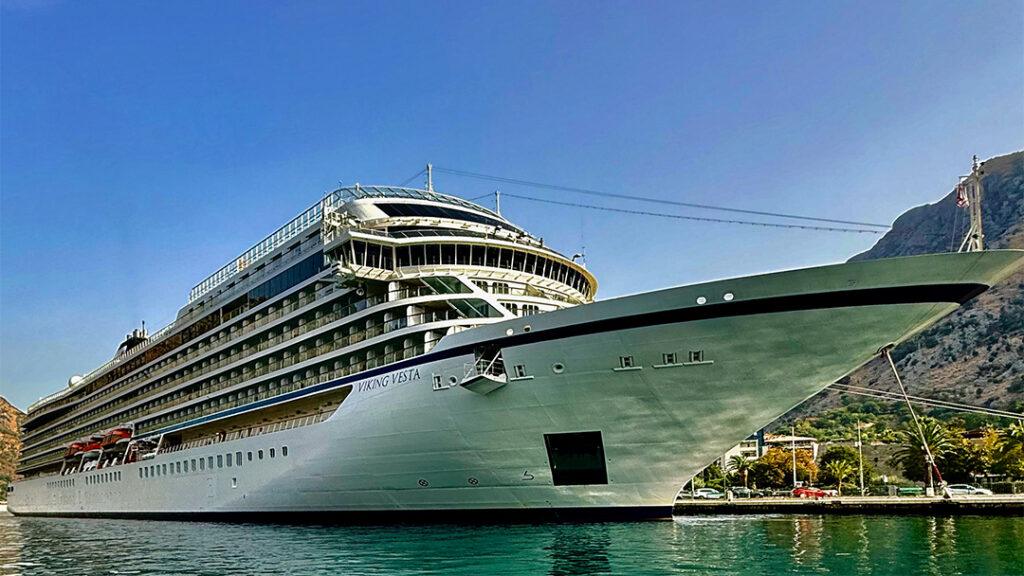
St. Matthew’s Church rises above the waterfront in Dobrota on the Bay of Kotor, Montenegro. Credit: Monte Mathews Our Lady of the Rocks appears against the dramatic mountains of Montenegro’s Bay of Kotor. Credit: Monte Mathews Our Lady of the Rocks sits on a small islet in the Bay of Kotor, Montenegro. Credit: Monte Mathews Viking Vesta shows off her sleek profile while docked in Kotor, Montenegro. Credit: Monte Mathews

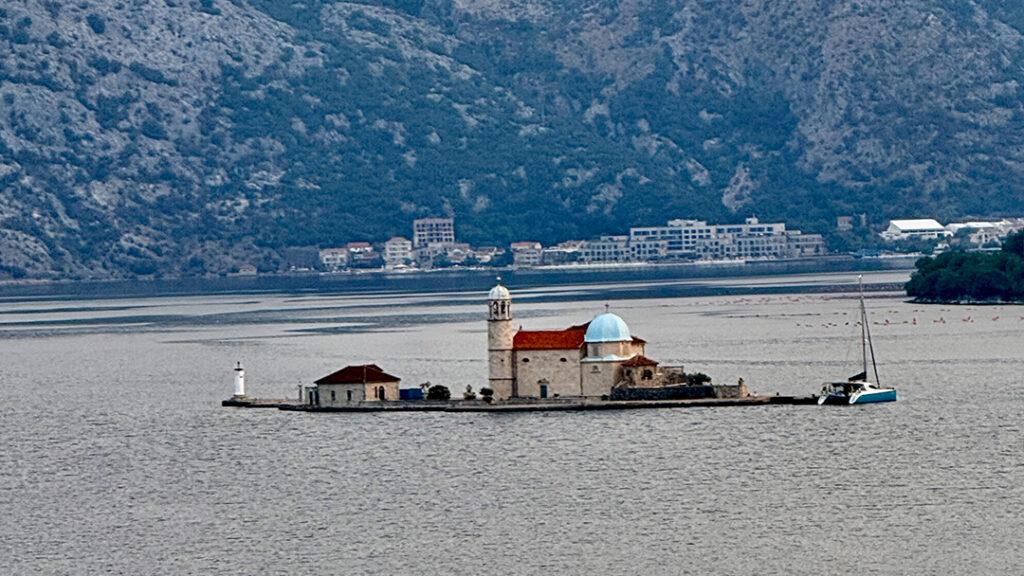
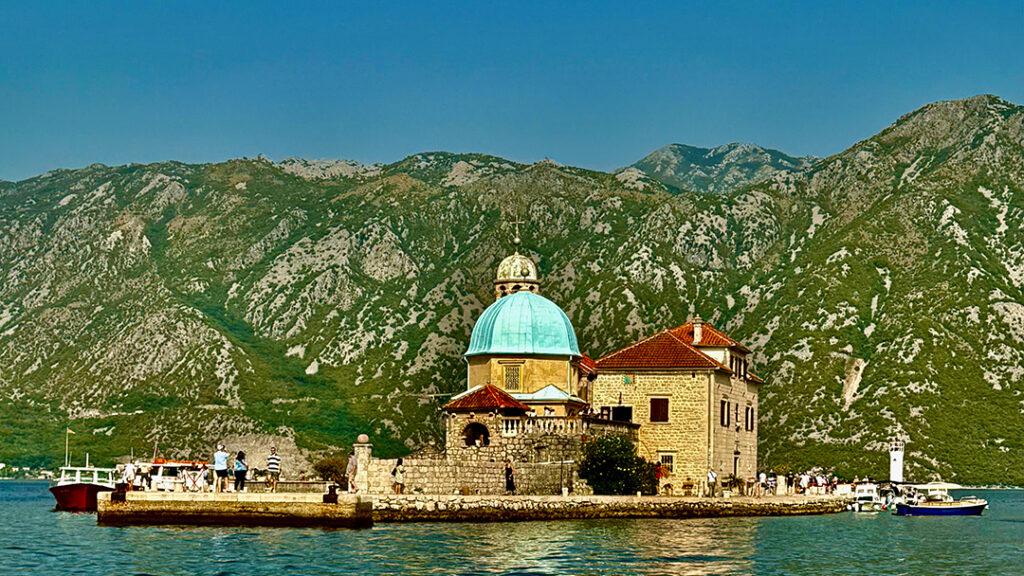
Fortunately, we had booked a boat excursion across the bay to Perast, one of Montenegro’s loveliest small towns. Just offshore stands Our Lady of the Rocks, a tiny man-made island crowned by its blue-domed church. With Perast facing us across the water and mountains enclosing the bay, the setting possessed a stillness that even the arrival of visitors could not entirely disturb.
Some ports are worth visiting for what waits beyond the pier. Kotor begins rewarding passengers long before the ship arrives.
Dubrovnik After the Dragons
Dubrovnik was already one of the world’s most extraordinary walled cities before television discovered it. Then Game of Thrones arrived, and nothing has been quite the same since.

Fans now approach Dubrovnik as a pilgrimage site, searching for King’s Landing among medieval walls that managed perfectly well for centuries without dragons. The crowds can be formidable, but even television fame cannot diminish the beauty of the city’s pale stone streets, red-tiled roofs and magnificent position above the Adriatic. Dubrovnik may have become a star, but at least it possesses the architecture to support the billing.
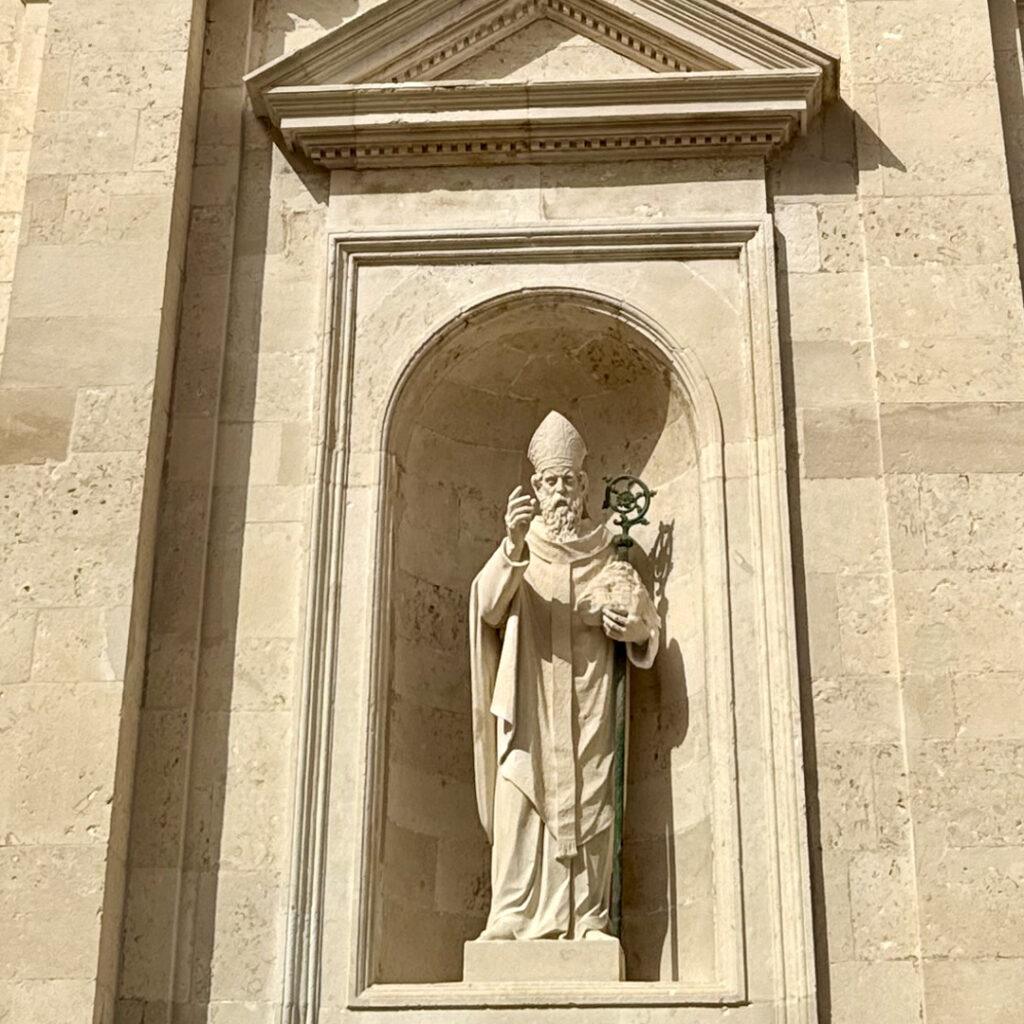
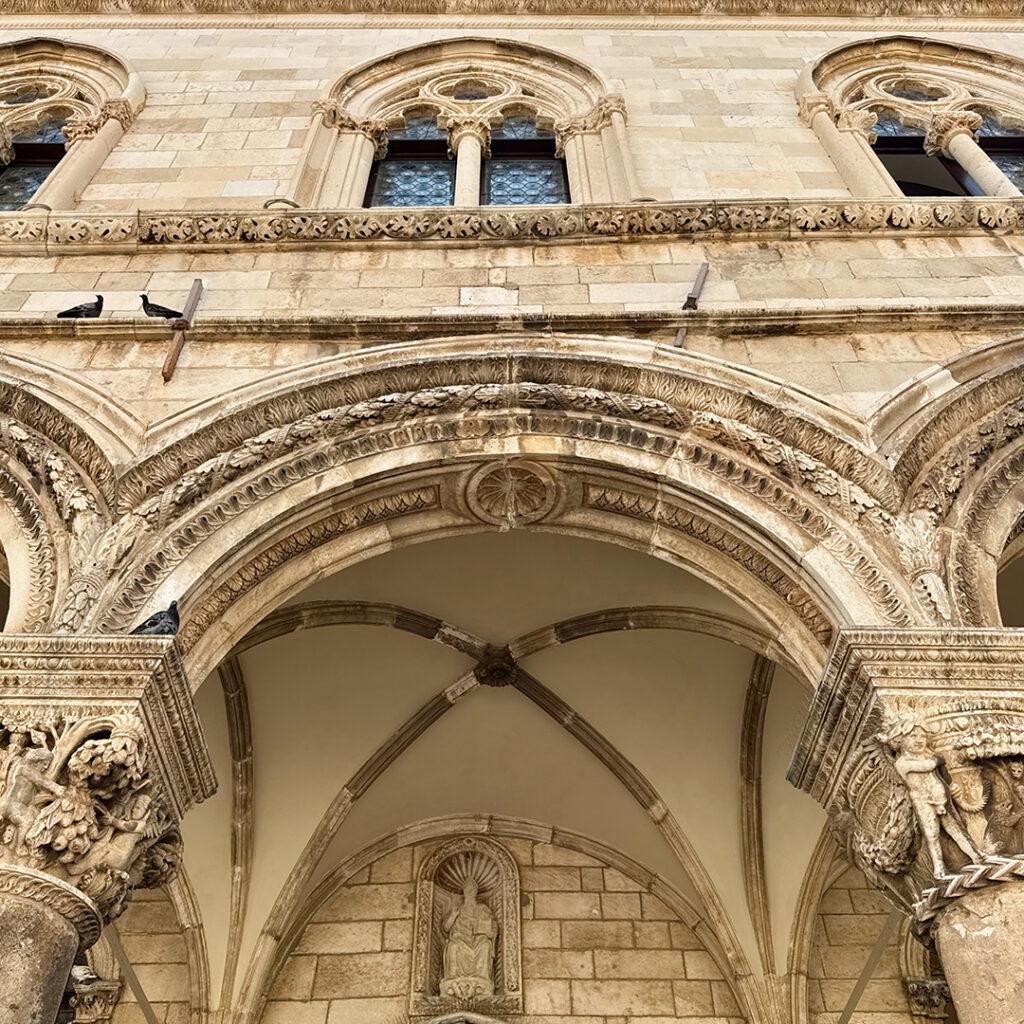
The bell tower of Dubrovnik’s Franciscan Monastery rises above the Old Town. Credit: Monte Mathews A statue of Saint Blaise, Dubrovnik’s patron saint, watches over the historic Old City. Credit: Monte Mathews Ornate arches and carved stonework frame the loggia of the Rector’s Palace in Dubrovnik. Credit: Monte Mathews

Diocletian & Dalmatian Flavors
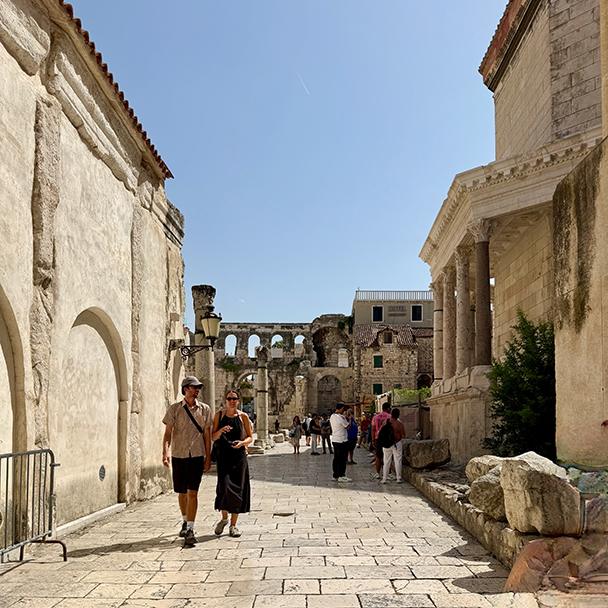
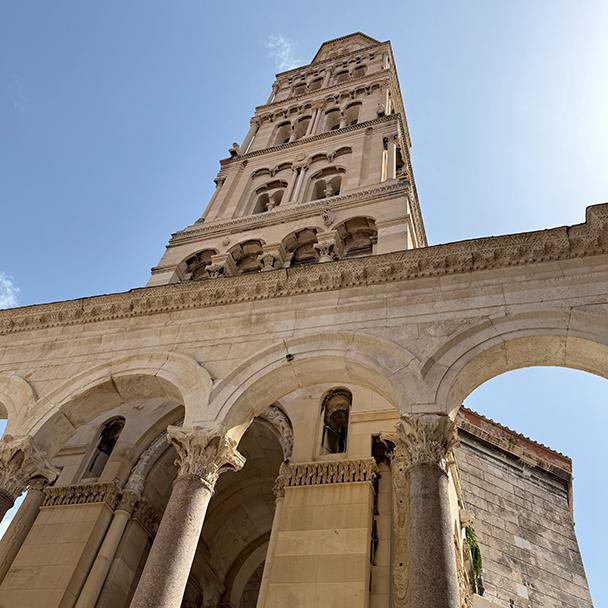
Split is largely the story of one man: the Roman emperor Diocletian. His enormous palace, constructed around A.D. 300, was never left politely behind as an archaeological ruin. Split grew into it, around it and through it. Shops, homes, cafés and churches occupy the ancient complex, while Diocletian’s mausoleum became the Cathedral of Saint Domnius—an outcome the emperor, a determined persecutor of Christians, would presumably have found annoying.
In true Viking fashion, our visit went beyond the principal monument. The optional Flavors of the Dalmatian Coast excursion took us into the countryside to Stella Croatica, a family-run estate devoted to the region’s culinary and agricultural traditions.
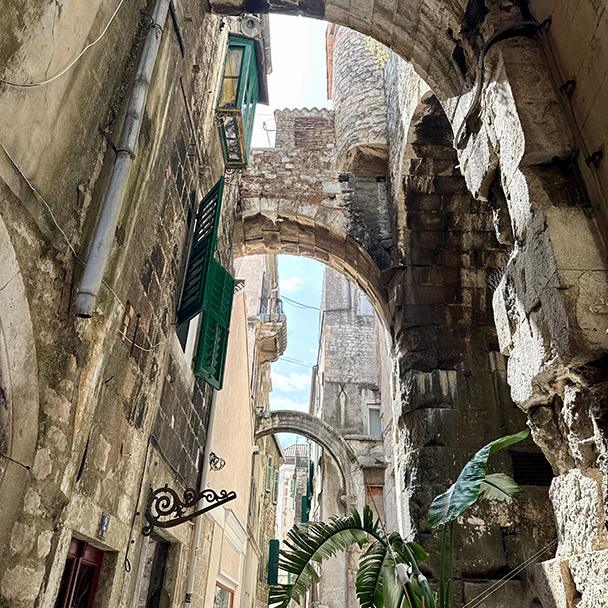
A street within Diocletian’s Palace in Split, Croatia, where Roman ruins remain woven into the modern city. Credit: Monte Mathews Bell tower of the Cathedral of Saint Domnius rises above Diocletian’s Palace in Split, Croatia. Credit: Monte Mathews A narrow passage winds through the historic heart of Split, Croatia. Credit: Monte Mathews
There were Mediterranean gardens filled with native herbs and flowers, an olive-oil museum, a distillery and tastings of local cheeses, tapenades, sweets and extra-virgin olive oil. Stella Croatica is undeniably a commercial enterprise; conveniently, however, it is an exceedingly attractive and informative one. By the time we reached the shop, we had been educated, entertained and softened up with olive oil—a highly effective sequence of events.
Traditional stone houses and Mediterranean gardens at Stella Croatica near Split, Croatia. Credit: Monte Mathews Olive leaves are arranged around a traditional mortar at Stella Croatica near Split, Croatia. Credit: Monte Mathews


Venice: The Perfect Finale
And then there was Venice.
Years ago, I won a trip there from Travel + Leisure, and Venice captured Andrew’s heart and mine. I have returned several times without him, but when we arrive together, there is always an element of homecoming—as if the city has been waiting patiently for us to find our way back.

This time, our leisurely walk inevitably led to Piazza San Marco and Caffè Florian, which opened in 1720 and has been going strong ever since. We ate ice cream beneath its historic arcades, listened to the café orchestra and watched one of Europe’s most beautiful public rooms conduct its daily performance.
Only one thing seemed to be missing: the pigeons.
Once, Piazza San Marco had enough of them to make crossing it resemble a supporting role in a Hitchcock film. Now their numbers have declined dramatically. Venice simply outlawed feeding them and removed the grain sellers who had turned the square into an avian buffet.
Apparently, even a Venetian pigeon knows when a restaurant has closed.

For us, however, Florian was very much open. Sitting there with Andrew, music drifting across the piazza at the conclusion of our journey, it was difficult to imagine a more fitting end to an itinerary that had carried us from the birthplace of the Olympic Games through the great cities of the Adriatic to a place we have loved for years.
Some cruises take you somewhere new. The very best ones also bring you home.


