

Villa Vie’s Next Odyssey: Legacy, Larger Cabins & Another Leap of Faith
Two years ago, I flew to Belfast to report on a residential cruise ship that was days away from sailing. I met its future residents, toured the vessel in drydock, and was photographed beneath its considerable hull with Villa Vie founder Mikael “Mike” Petterson.
I even called him “the hero of this story.”


Villa Vie founder Mikael “Mike” Petterson with Odyssey in drydock in Belfast. Photos: Monte Mathews
The ship remained in Belfast for another four months.
Journalism, like cruising, occasionally encounters unexpected weather.
The vessel was Villa Vie Odyssey, a 31-year-old former Fred. Olsen ship being transformed into something genuinely intriguing: a floating residential community scheduled to circle the world every three-and-a-half years. Instead of booking a holiday, passengers—or “residents,” in Villa Vie parlance—could buy a cabin and take their home around the globe.
The enthusiasm surrounding the idea was real. So was the eccentricity, which is often the most appealing part of any grand travel experiment.
One future resident greeted us dressed as a mermaid—an admirably literal response to buying a home on the ocean. A charming New Zealand couple had compressed their lives into 33 kilos of luggage and purchased an inside cabin for at least three-and-a-half years. Their two grown children planned to meet them at various points along the way.

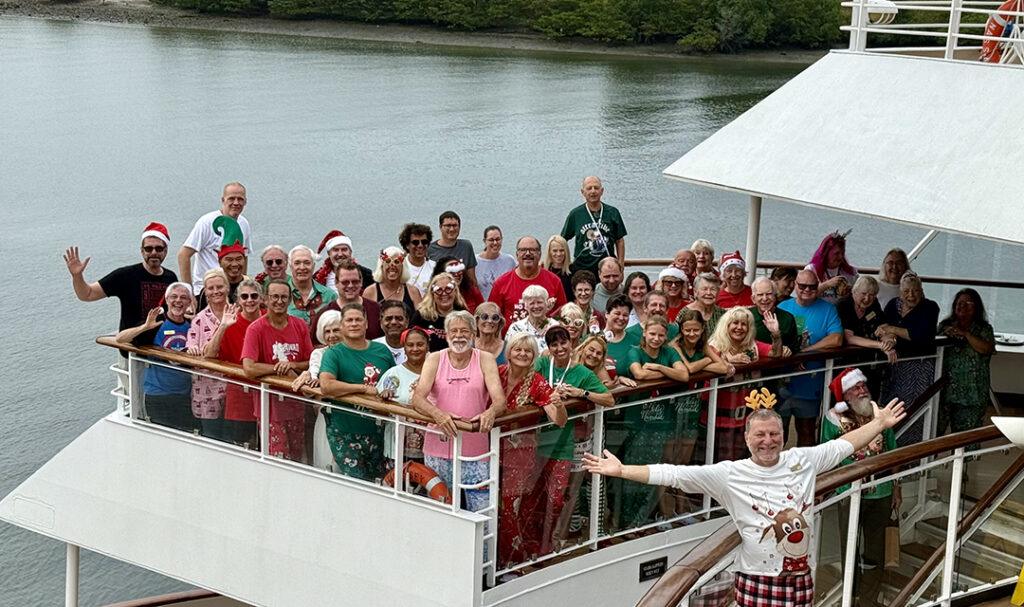
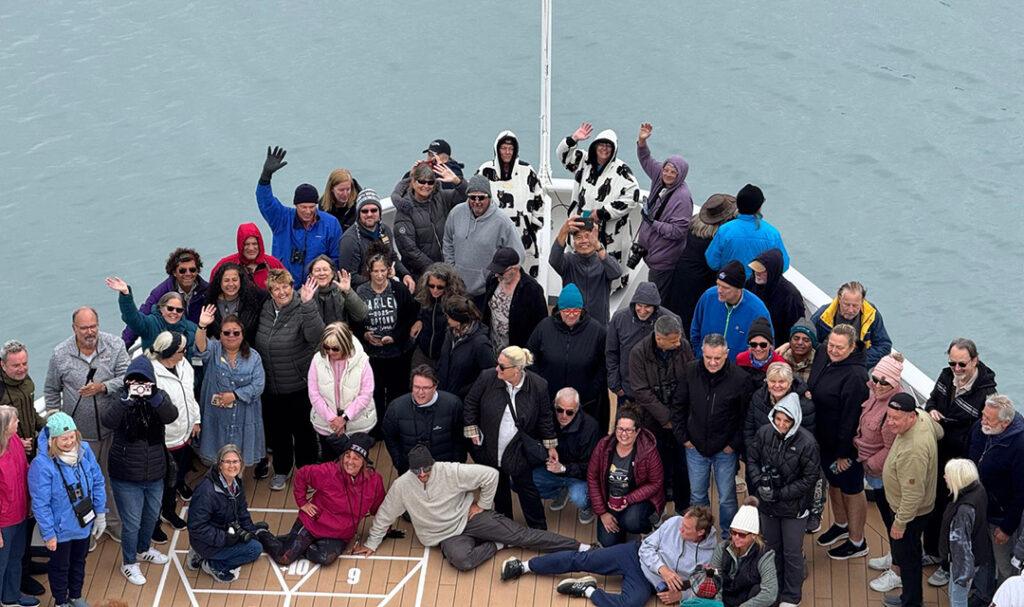
Villa Vie Odyssey residents gather on the bow. Photo: Villa Vie Residences Residents celebrate Christmas Day aboard Villa Vie Odyssey. Photo: Villa Vie Residences Residents gather on the bow of Villa Vie Odyssey in Alaskan waters. Photo: Villa Vie Residences

This was clearly more than a cruise booking. It required the sort of faith normally associated with religion, romance or buying property from a rendering.
Long Road Out of Belfast
When I visited Odyssey, the anticipated departure had already moved from May 30 to June 15. The ship needed new rudder stocks—components that, as I explained at the time, are rather useful if one wishes a ship to turn.
Petterson’s team was arranging hotels, meals and local excursions for residents during what everyone believed would be a brief delay. I praised the company for responding quickly and putting safety first. All perfectly reasonable.
June 15 came and went.
Further repairs and certification issues followed, including work involving the ship’s gearbox. Residents who had sold homes, packed their belongings and crossed oceans to begin new lives at sea instead spent the summer becoming accidental citizens of Belfast. They could visit Odyssey during the day but had to return to hotels at night.
Odyssey finally departed Northern Ireland in early October 2024, roughly four months later than expected. Even then, she initially made it only as far as Belfast Lough before additional paperwork was completed. Eventually, however, the ship sailed—and that matters.

For all the delays, headlines and understandable frustration, Villa Vie did what several residential-cruise ventures have failed to do: it got its ship into service. Odyssey is now sailing, its residents are living aboard and, according to the company, more than 85 percent of its available residences have been sold.
The improbable dream did not sink. It merely spent rather longer than advertised beside the Harland & Wolff shipyard.
Enter Legacy
Now Villa Vie is preparing its second act.
The company has announced Legacy, a “premium sister ship” expected to enter service in early 2029. Villa Vie says its residences will be approximately 50 percent larger than comparable accommodations aboard Odyssey, with expanded restaurants, larger public spaces, enhanced wellness facilities and additional luxury amenities.
The additional space will carry an additional price. Ownership and monthly maintenance costs are expected to average approximately 30 percent more than aboard Odyssey.

Full details are promised during Odyssey’s Two-Year Sailaversary Celebration. “Sailaversary” may not yet trouble the Oxford English Dictionary, but it certainly knows its way around a press release.
What the announcement does not reveal is just as interesting. Villa Vie has not publicly identified the vessel that will become Legacy. There is no former ship name, acquisition announcement, shipyard, financing arrangement, or firm delivery schedule in the release. For the moment, Legacy consists of an entry-into-service target, several enticing promises and a name with considerable confidence.
There is also an intriguing echo from Belfast. In my 2024 report, I wrote that Petterson was “about to sign on the dotted line” for a second cruise ship, one slightly larger than Odyssey. Is Legacy that ship, a different ship, or the evolution of an earlier plan? It is precisely the sort of question a two-year Sailaversary invites.
A Bridge to a Ship Yet to Come
Villa Vie is not asking prospective residents to sit patiently on shore until 2029. Instead, it has created the Legacy Bridge Program, limited to 24 new buyers.
Participants purchase a residence aboard Odyssey and begin living at sea immediately. When Legacy enters service, they will have the right to move into a comparable residence without paying an additional purchase price. Villa Vie also says their Odyssey maintenance rates will be honored aboard Legacy, despite the new ship’s anticipated premium.
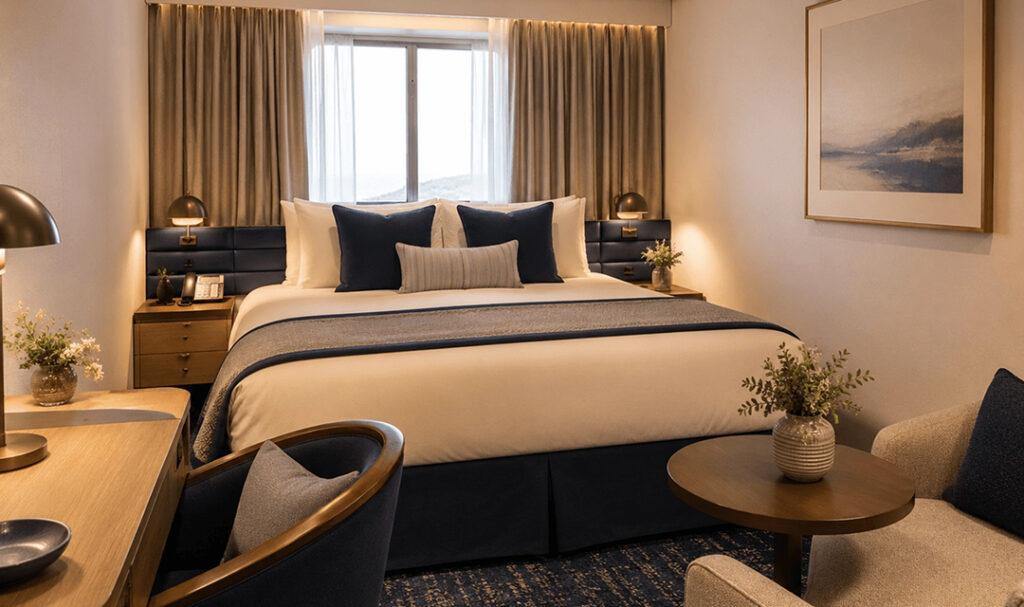
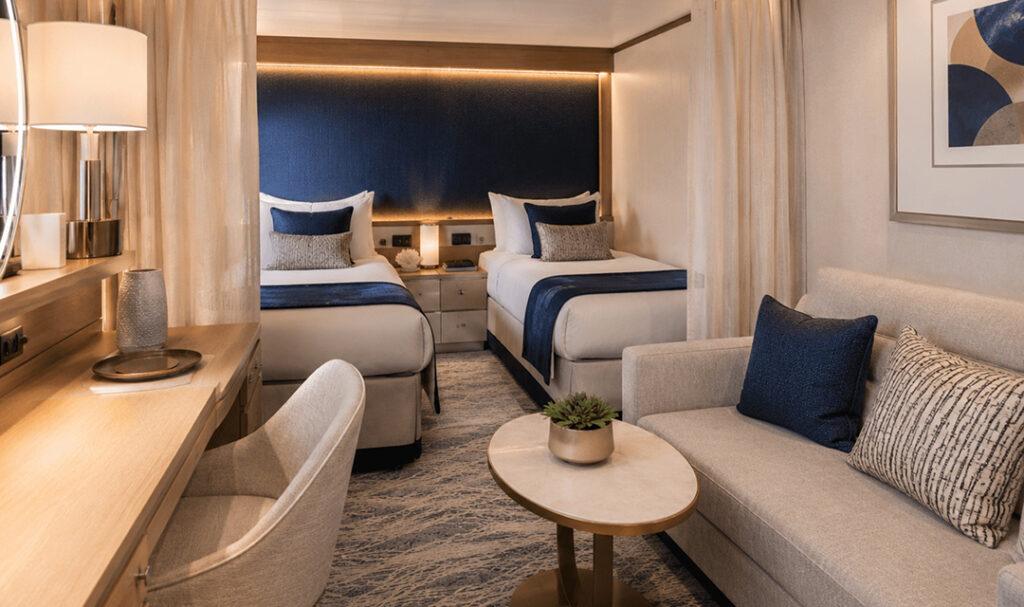
A rendering of a balcony residence planned for Villa Vie Legacy. Rendering: Villa Vie Residences A rendering of an outside residence planned for Villa Vie Legacy. Rendering: Villa Vie Residences A rendering of an inside residence planned for Villa Vie Legacy. Rendering: Villa Vie Residences

For buyers already drawn to this unconventional life, the proposition has obvious appeal: spend nearly three years exploring the world rather than waiting for the next vessel, then move into larger quarters without paying the expected upgrade premium.
It is also a substantial commitment to make while Legacy’s identity and specifications remain undisclosed. “Guaranteed” transitions are only as reassuring as the contract defining them. Prospective buyers should want to know what happens if the new vessel is delayed, materially changed or does not enter service on schedule; how a “comparable” residence will be determined; whether maintenance rates can increase for other reasons; and what remedies apply if the bridge does not reach its intended shore.
Those are not cynical questions. They are the questions Villa Vie’s own history makes essential.
What Odyssey Proved
Petterson says Odyssey demonstrated that residential cruising is not merely possible but sustainable. There is evidence supporting at least the first half of that claim. The ship sailed. A community formed. Buyers came. And if Villa Vie’s 85 percent figure is accurate, the market has delivered a fairly emphatic response.
Odyssey has also shown why residential cruising is more complicated than an extended holiday. Buyers are not simply gambling a week’s vacation on whether the buffet is agreeable. They may sell their homes, restructure their finances and arrange their family lives around a vessel’s itinerary. Delays that would be irritating on an ordinary cruise can become existential when the ship is also your address.
Villa Vie Odyssey near Gros Piton in St. Lucia. Photo: Villa Vie Residences Villa Vie Odyssey in Lisbon, Portugal. Photo: Villa Vie Residences Villa Vie Odyssey in Alaska. Photo: Villa Vie Residences

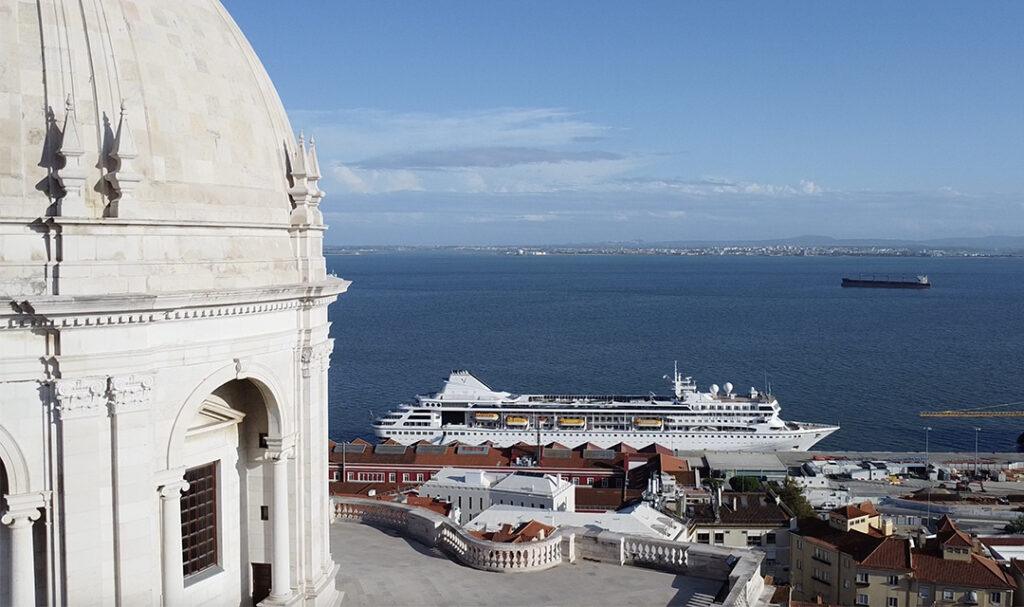
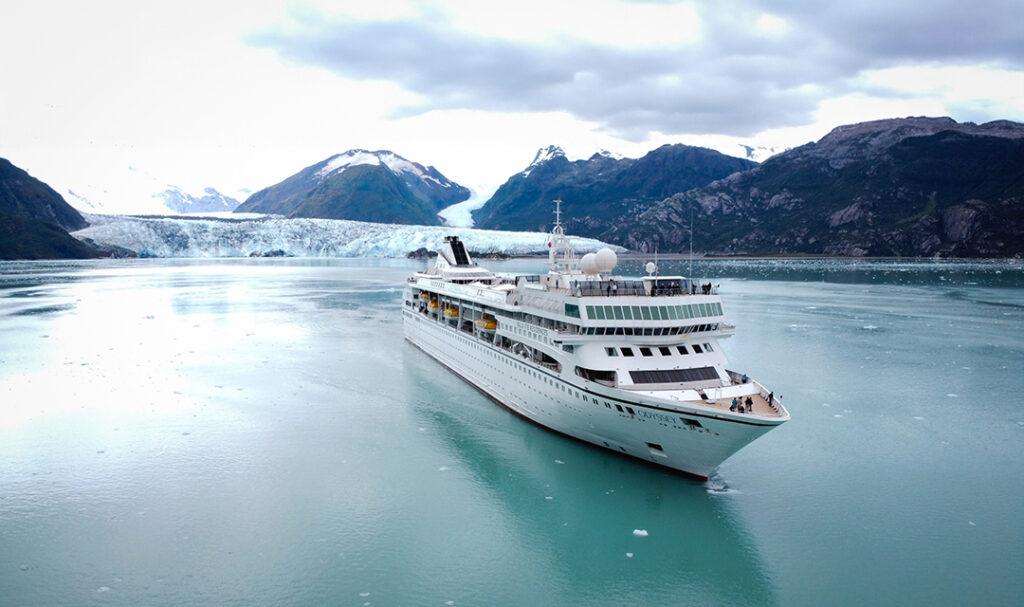
That makes Legacy more than a fleet announcement. It is a test of what Villa Vie learned in Belfast and during Odyssey’s first years of operation. Can the company turn experience into more realistic timetables, clearer buyer protections and a smoother path from ambitious rendering to functioning residence?
Villa Vie has earned the right to be taken seriously. It has not earned the right to go unquestioned. In truth, no company selling a home aboard a yet-to-be-identified ship should expect otherwise.
I still have the photograph of Petterson and me standing beneath Odyssey in Belfast. It captures two men looking confident about a ship that was nearly ready to sail.
I doubt I will ever pose beneath a ship in drydock again.
But Legacy? I am prepared to keep an open mind—and a very close eye on the departure board.


