

New Books & Ocean Liner Scenes & Notes, from Inaugurals to Wrecks
Printing Presses
With our next book (On All the Seven Seas) having its debut this winter, the mail includes the proof pages for our next book: Picture Encyclopedia of Passenger Ships 1955. Both books will come from Fonthill over in the UK and will be available on Amazon and Amazon UK.
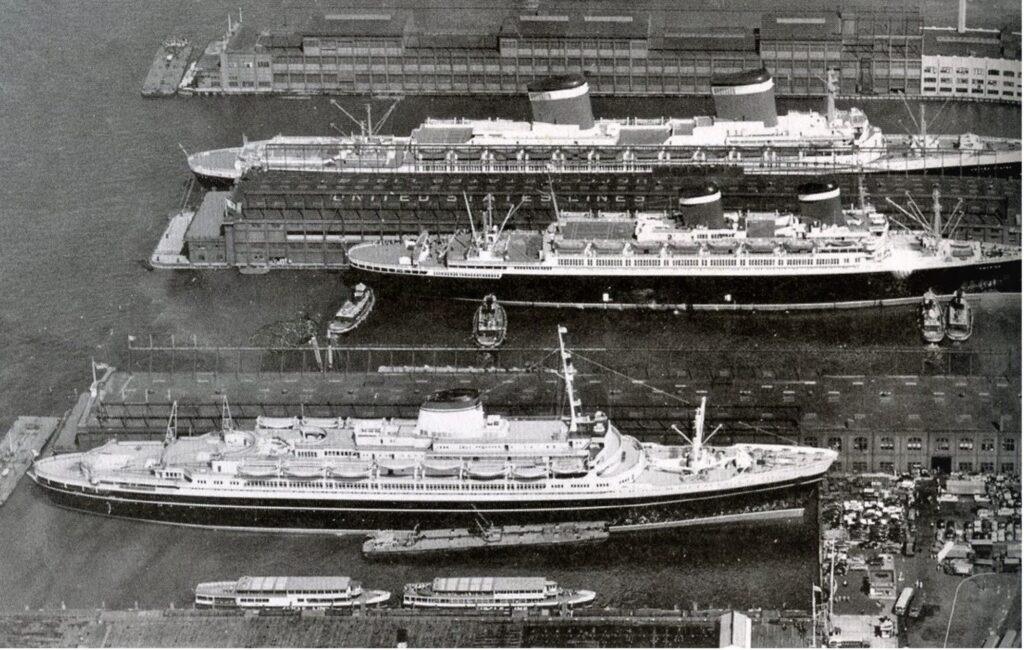
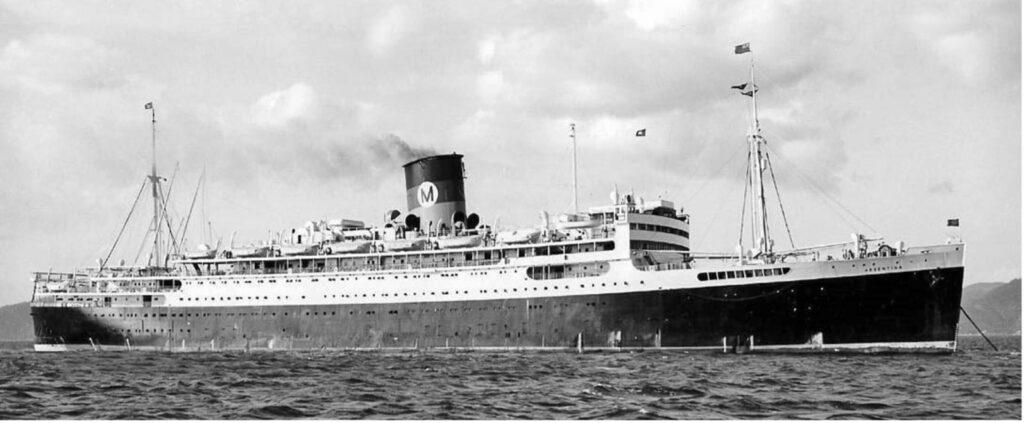
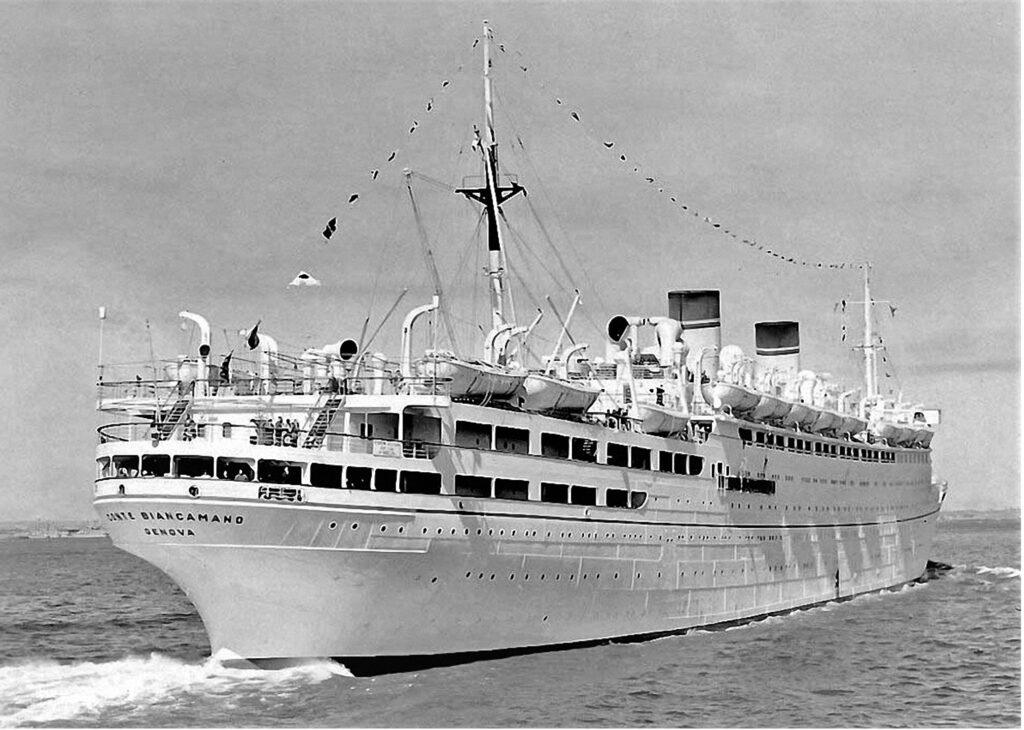
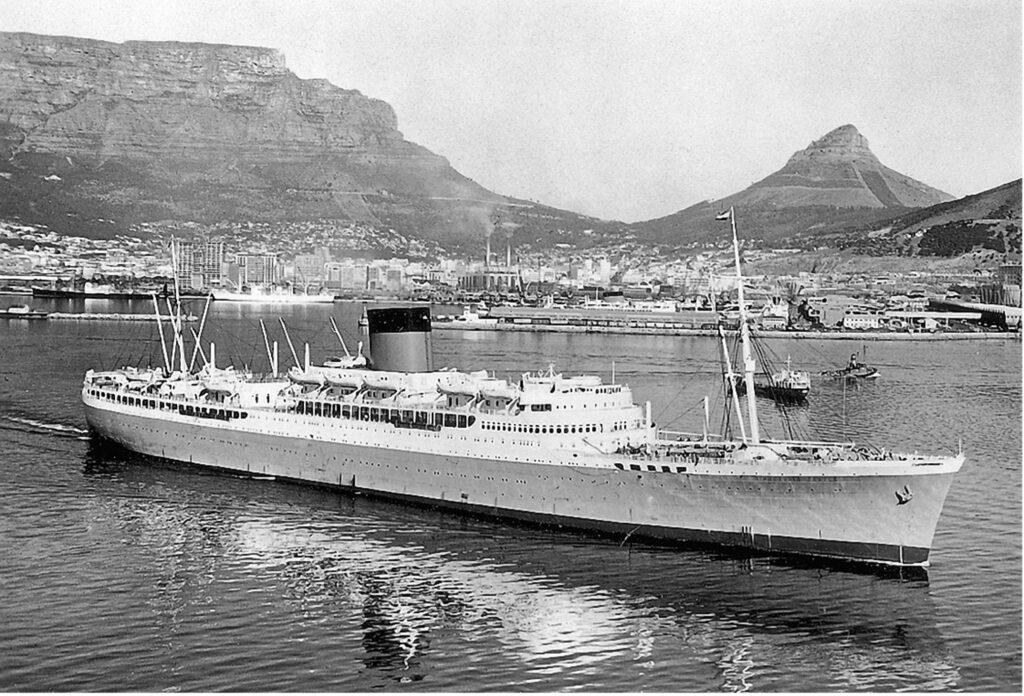
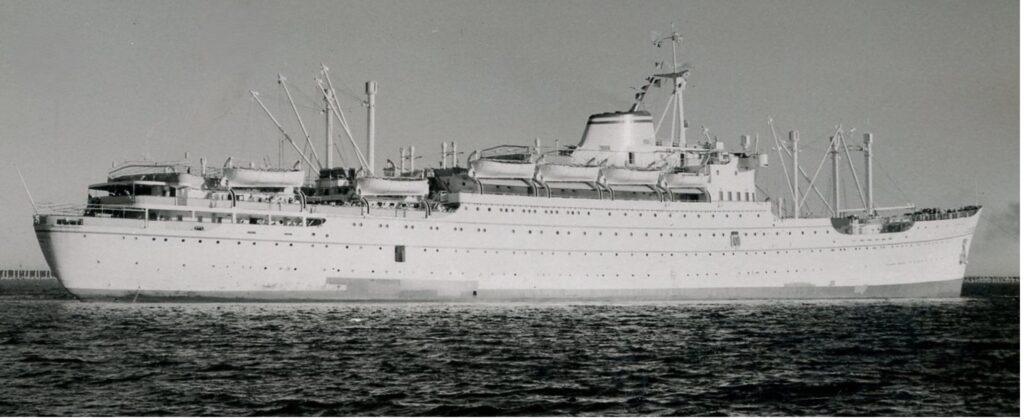
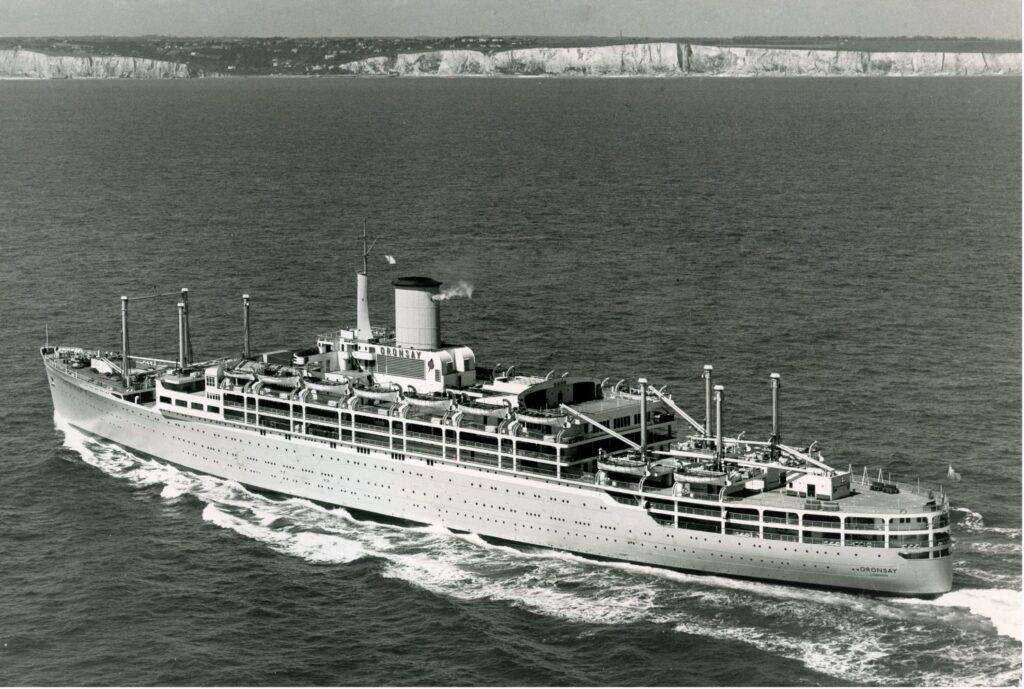
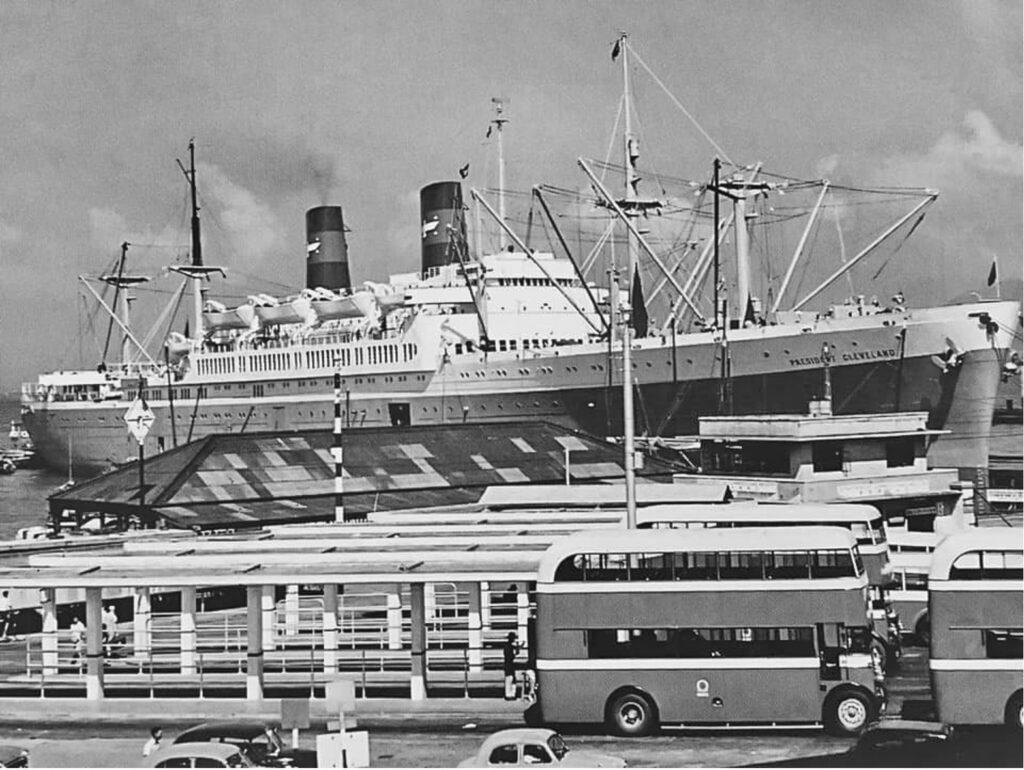
Among the passenger ships that will be included in Picture Encyclopedia are:

The French Line’s Ile de France. Courtesy of the William H. Miller collection. The liners Cristoforo Colombo, America and United States seen together in Manhattan. Courtesy of the William H. Miller collection. The liner Argentina. Courtesy of the William H. Miller collection. The Italian liner Conte Biancamano. Courtesy of the William H. Miller collection. The liner Pretoria Castle. Courtesy of the William H. Miller collection. The liner Australia. Courtesy of the William H. Miller collection. The liner Oronsay. Courtesy of the William H. Miller collection. The liner President Cleveland. Courtesy of the William H. Miller collection.

Chatter
Every two days (or so), ocean liner enthusiasts gathered (in the Champagne Bar on Deck 3 onboard the Queen Mary 2) for an informal chat, sharing, swapping of stories and collections. What fun!
Axel Breest is one of Germany’s greatest and most knowledgeable ocean liner collectors. Quite simply, he knows his subject. I’ve learned new things from our afternoon, every-other-day chat sessions in the otherwise empty Champagne Bar. He tells us, for example, that the Nazi-German cruise ship Wilhelm Gustloff of 1938, but which sank near the end of World War II, in January 1945, and with the horrific loss of as many as 9,000, is now very collectible in Germany. Pieces are appearing and some even brought up from the bottom of the Baltic.

Morning Arrival
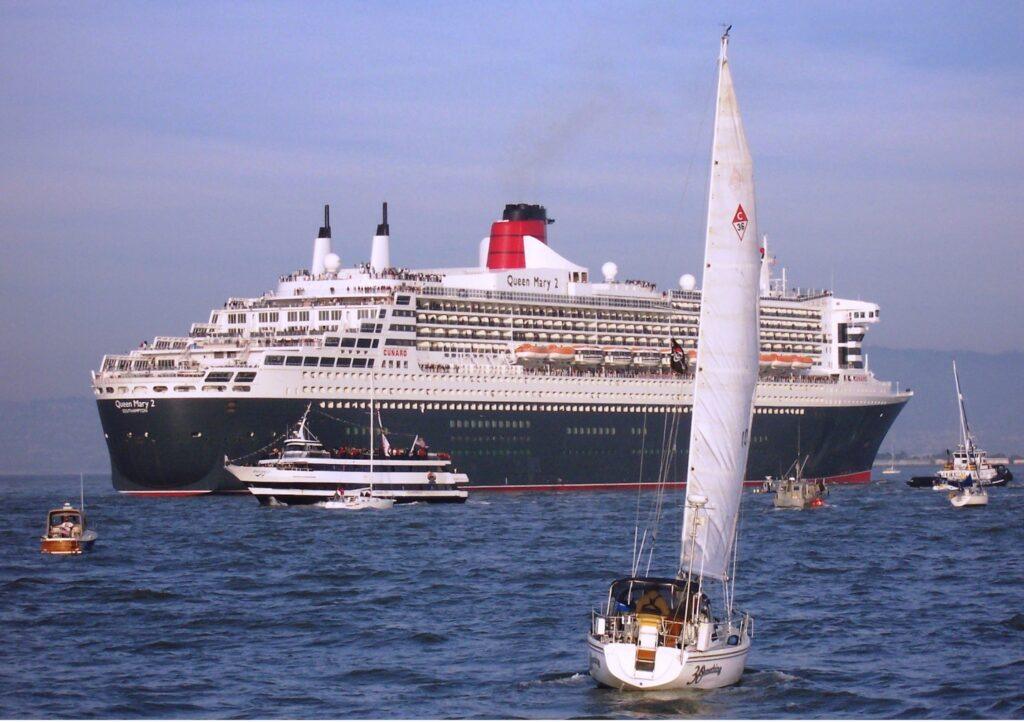
Happily, we were here in 2008 when the Queen Mary 2 made its very first visit to San Francisco. With horns and sirens sounding, the ship had a triumphant Sunday afternoon welcome. A day later, we boarded and sailed to Hawaii, Pago Pago, New Zealand and then over to another gala welcome in beautiful Sydney harbor (and a rendezvous with the QE2.)
Queen Mary 2 makes a grand arrival beneath the Golden Gate Bridge during her landmark 2008 visit to San Francisco, greeted by a festive fleet of sailboats. Courtesy of the William H. Miller collection. Queen Mary 2 sails into San Francisco Bay during her 2008 debut visit, surrounded by excursion boats and sails in a celebratory escort. Courtesy of the William H. Miller collection.

Sad Ending
The former America, completed back in 1940 for United States Lines, had a very sad finish to its career. Renamed American Star and while being towed (on the West African route and around the Cape) from Greece to Thailand, the towlines snapped and the 723-ft long ship drifted ashore off Fuerteventura in the Canaries. Lashed by strong winds and heavy waves, the ship later broke in two (January 20, 1994). Two years later, the stern section collapsed and fell into the sea; the forward section lingered until it too fell into the sea in April 2007.


Two views of the wrecked American Star off Fuerteventura in 1994, showing the liner’s dramatic breakup after running aground while under tow. Courtesy of the William H. Miller collection.
A Huge Funnel
The 30,000-ton Pasteur – created for France’s Compagnie Navigation Sud-Atlantique – was to have had a gala maiden voyage. She would be France’s finest luxury ship trading to South America (to Rio, Santos, Montevideo and Buenos Aires) and set sail for the first time in September 1939.
But much of Europe, including the French themselves was worried, in fact extremely worried. The Nazi war machine had attacked little Poland – and that was just the start. Sensibly, the Pasteur’s maiden voyage to the South Atlantic was canceled and instead the 699-ft long ship sent to a backwater near Bordeaux and laid-up for safety. But then as things grew more serious and, by May 1940, when France itself was about to be invaded, the Pasteur was quickly readied to go to sea.

The Pasteur, seen above at Pier 88 in June 1940, had the largest funnel yet to go to sea. Painted entirely in gray, the Pasteur was loaded with as much as 10 tons of gold from the French Reserves in Paris and being sent to Halifax for safe wartime-keeping in Canada. Afterward, the new French liner itself was dispatched to New York, where she would begin carrying troops but under Allied control and under the operation of Cunard-White Star.
PS: Long after the War ended, in 1957-59, the Pasteur was sold to the West Germans, to the North German Lloyd, and rebuilt as the Bremen. In 1972, it began cruising for Chandris as the Regina Magna.

Lives of the Liners: Kungsholm/Italia
Sweden’s flagship, this ship had careers both as an Atlantic liner and popular cruise ship. And following World War II, it did the same but for other owners. Success and profitability – and popularity – remained with it.

Built at Hamburg and completed in 1928, this 20,223-ton liner was sold to the US Government during World War II, in 1942, and became the troopship USS John Ericsson. Damaged by fire at New York in 1947, it was resold to the original owners, the Swedish American Line, but then promptly sold again to the Home Lines (Panamanian flag) and refitted as the Italia. Used for Italy-South America and later North Atlantic services to New York and to Montreal, it was used as a full-time cruise ship 1960-64. Sold to Bahamian interests in 1964, it became the moored floating hotel Imperial Bahama Hotel at Freeport. Unsuccessful, it was sold to Spanish shipbreakers a year later.

Tight Fit

The 577-ft long Oslofjord just about squeezes into a drydock at Oslo. Back in 1949, the 640-passenger ship was the largest under the Norwegian flag.

Mediterranean Sunshine
In the late 1920s, Italy’s Cosulich Line was running its finest liners yet, the Saturnia and Vulcania, on an extended trans-Atlantic service from Trieste, Venice and other ports in the Mediterranean over to New York. Venice to Manhattan took 14 days. Their poster art (below) was quite evocative.

Passengers crowd the decks of the Vulcania during its 1927 maiden departure. Courtesy of the William H. Miller collection. Passengers relax in the indoor swimming pool aboard the Vulcania, reflecting the liner’s stylish onboard amenities in the interwar years. Courtesy of the William H. Miller collection. A first-class suite bedroom aboard the Saturnia, showcasing the refined décor and spacious accommodations offered to passengers in 1928. Courtesy of the William H. Miller collection.


Off to Australia
A fellow passenger spent several years (in the 1960s) working for the Port Line, a cargo division of Cunard but now long gone from the sealanes. He told me, “I served on several of their ships on the run to Australia and mostly bringing meat and wool homeward to the UK. My favorite was the Port Alfred, which I always felt looked like a little passenger liner.”


