

From Liverpool’s Docks to a Missed Andrea Doria Sailing
Long Ago Voyages
Eleanor C. has taken over 50 cruises including several world cruises. While onboard the Queen Mary 2 and yet another world cruise, Eleanor told me: “I have been on many ships over the years, but my very first cruise was over 60 years ago. My father and mother took us from New York to the Caribbean. It was three weeks and with lots of ports. The ship was the Empress of England.”

On the Waterfront
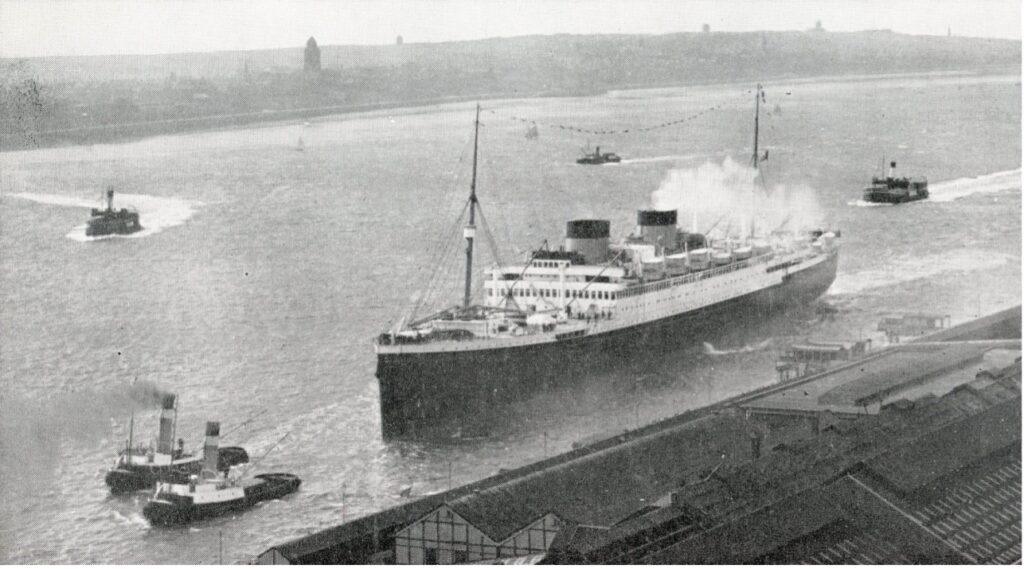
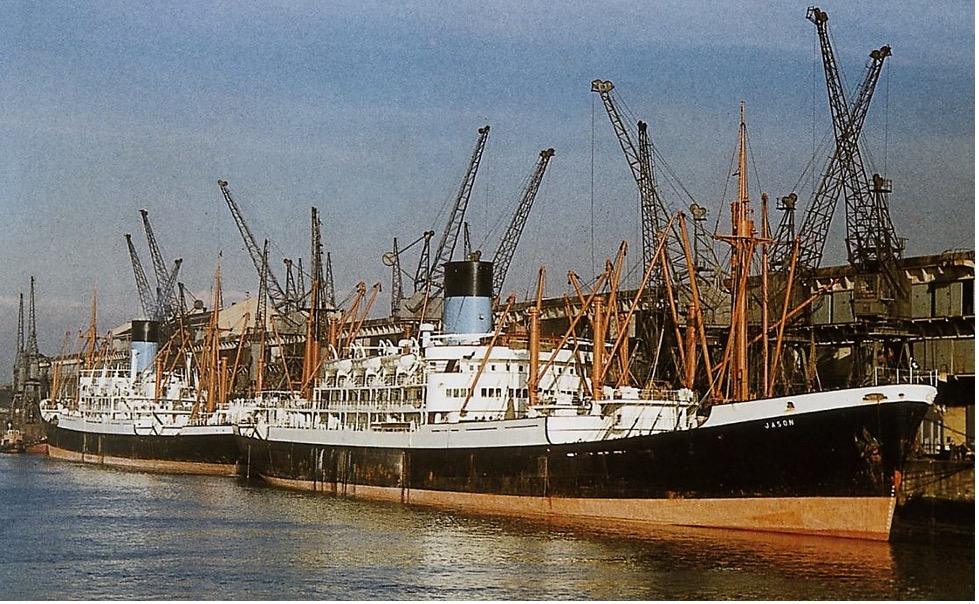
Cameron grew-up in 1950s Liverpool and remembered: “Often I would go down to the Docks. The Mersey was bursting with shipping of all shapes and sizes back then. But I especially remember the big Cunarders and the Canadian Pacific liners going across the Atlantic to Canada. And the Britannic, Media and Parthia sailing to New York. The destinations of these ships fascinated me – and not only the liners. The big Blue Funnel ships sailed off to Singapore and Hong Kong, the Ellerman freighters to Australia and New Zealand and the Brocklebank Line to India. One of my favorites was the Reina Del Mar, which sailed every other month or so from Liverpool to the Caribbean, the Panama Canal and then along the entire West Coast of South America. That itinerary seemed so exotic!”

The Reina del Mar at Liverpool. Courtesy of the William H. Miller Collection. The Britannic at Liverpool. Courtesy of the William H. Miller Collection. The Blue Funnel Line’s Jason at Liverpool. Courtesy of the William H. Miller Collection.

Northern Waters
Ian W. took his first Cunard cruise back in the 1990s. “It was a cruise from Southampton to Norway, onboard the QE2,” he recalled. “The ship was wonderful – and, to me, seemed huge. But seeing it in the Fjords was especially thrilling. I shall never forget it – and sight of the QE2 on the tender rides to and from shore.”

Italian Crossing
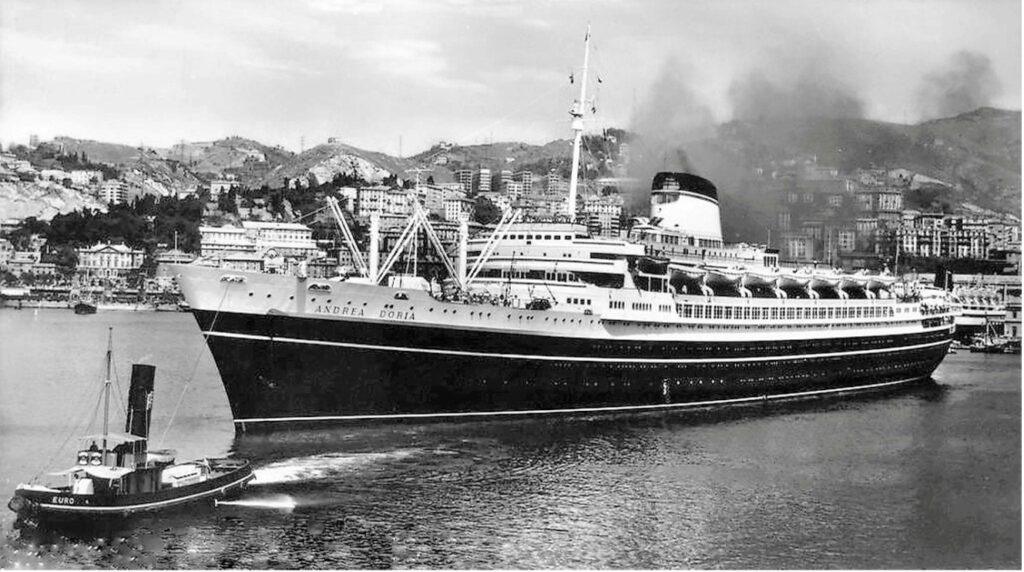
From Brooklyn, Tony told me: “My grandparents were born in Italy. In June 1956, they made their first visit back to the ‘old country’ as they called it. They sailed over to Naples on the Saturnia. After two months, they were to sail home to New York on the Andrea Doria.
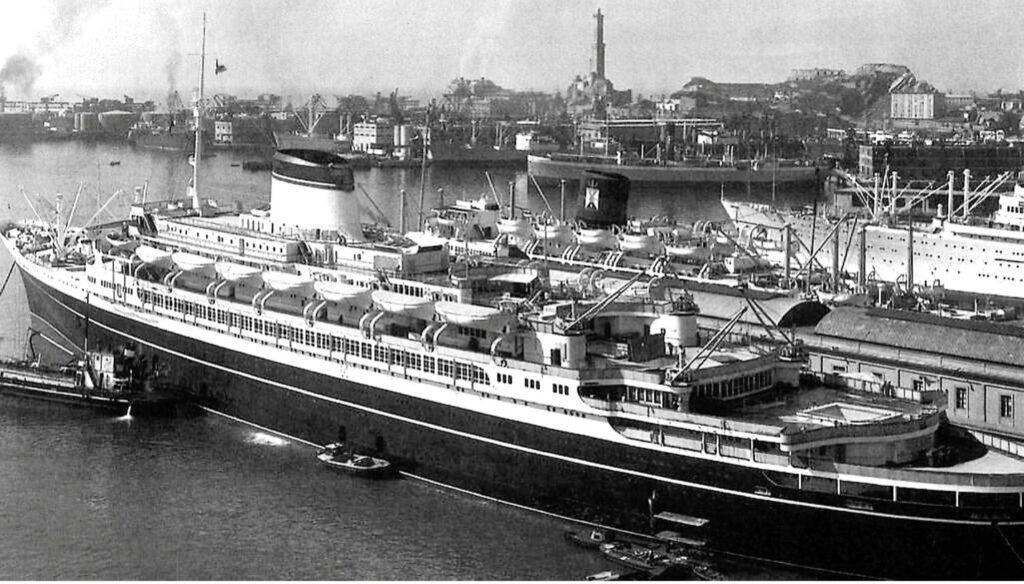
“But then they were informed that the ship sank [on July 25-26th] and they would have to remain in Italy (with family) for another three or four weeks before passage could be found. They had been booked in tourist class, but upgraded to cabin class on the Cristoforo Colombo. Afterward, my grandmother prayed for a year, as I remember, and thanked God that they were not onboard the Andrea Doria!”
The Italian liner Saturnia, which carried generations of immigrants and visitors between New York and Italy. Courtesy of the William H. Miller Collection. The Andrea Doria. Courtesy of the William H. Miller Collection. The Cristoforo Colombo. Courtesy of the William H. Miller Collection.

Far East Service
Jack S. worked for the United States Lines in their Lower Manhattan headquarters in the 1960s. “I was actually assigned to a subsidiary, the American Pioneer Line. Mostly, they ran big freighters and which carried a dozen passengers. The route was from New York via Panama to Yokohama, Kobe, Pusan, Keelung, Manila and Hong Kong.”

Schools Cruising
Henry, a passenger onboard the Queen Mary 2, remembered that his very first cruise was in 1970. It was aboard the educational cruise ship Nevasa, which was run by London-based British India Cruises. “The ship was divided, almost like two class – 300 adults and separately 900 students,” he remembered. “We sailed from Liverpool and visited ports in France, Spain and Portugal. It was a great adventure – and lots of good fun.”

Keeping An Eye
A fellow passenger from Australia told me: “While you watched the great liners at New York, from Hoboken, I watched at Sydney. I know all the liners – P&O, Lauro, Shaw Savill, Matson and many others. But I especially remember the sight of the France, then the world’s largest liner, at Circular Quay in Sydney. It was so impressive. To me, it was the ultimate modern-day trans-Atlantic ocean liner.”
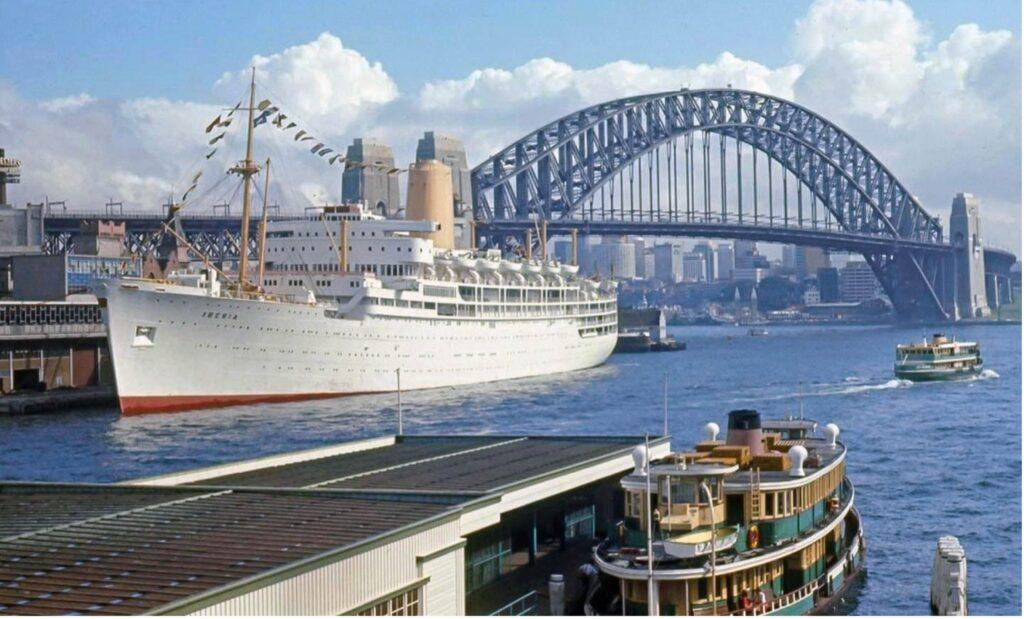
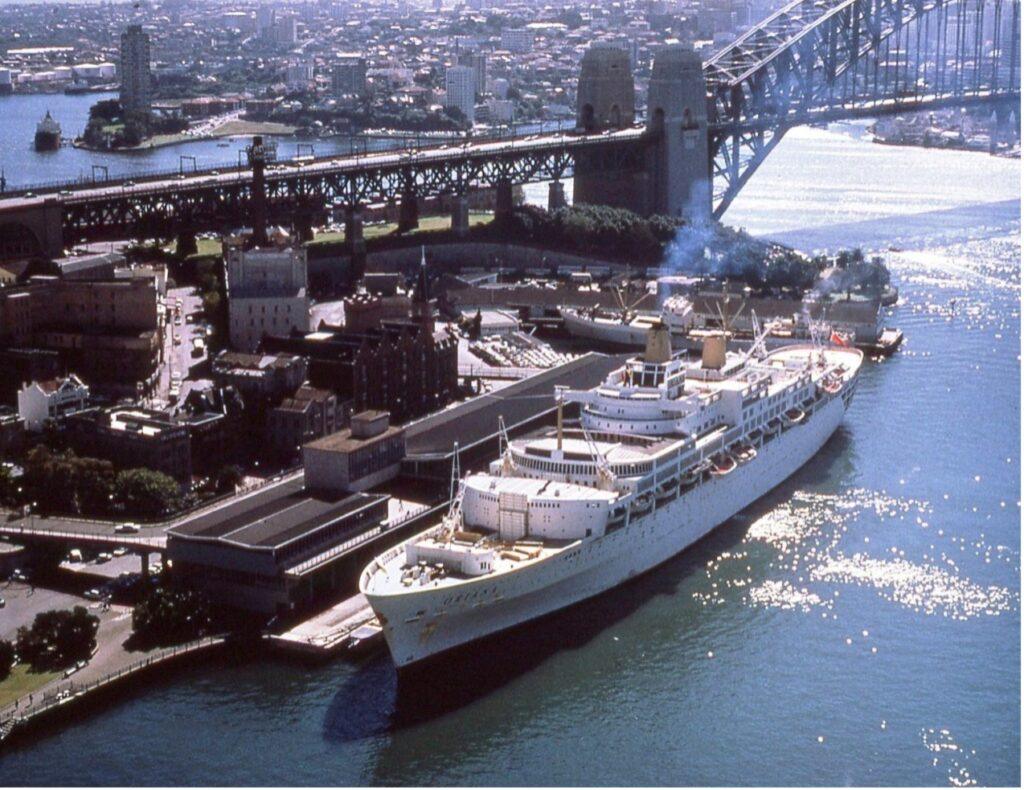
The French Line’s France at Circular Quay, Sydney. Courtesy of the William H. Miller Collection. P&O’s Iberia at Sydney Harbour. Courtesy of the William H. Miller Collection. P&O’s Oriana at Circular Quay, Sydney. Courtesy of the William H. Miller Collection.

Lives of The Liners: Europa (1930)

A near-sister to the Bremen of 1929, both liners achieved great acclaim by winning the Blue Riband for record Atlantic passages. But the Europa had a close call: It was nearly destroyed by fire while still incomplete, in March 1929, and might even have been scrapped. It was repaired, however, but delayed by over a year. The 49,000-ton ship was laid-up at Bremerhaven in September 1939 and remained there until seized by American invasion forces in May 1945. Briefly used as the troopship USS Europa, it was plagued with small fires and so given over to the French in 1946 as reparations. Renamed Liberte, it was nearly lost a second time after sinking at her Le Havre berth in December 1946. Salvaged and finally restored, it entered French Line trans-Atlantic service in August 1950.


