

Afternoon Tea, Wartime Crossings & the Soul of Ocean Travel
French Grandeur
Fellow guest Russell O. told me: “My family went to Europe in 1960. We sailed over on the French Line, onboard the Liberte. It was big, beautiful, a true ocean liner. The food, the service, the sheer style were fabulous — days on deck, movies in the theater, afternoon tea and beautifully dressed passengers in the evenings. It was a light show with all the jewelry.”

“We returned on the much smaller, less fancy Flandre.”

Choices
“I crossed several times on the old Queen Mary and Queen Elizabeth. They were true examples of British stateliness,” remembered Jasper H.
“But once, I tried the then new France (in 1963). The food and the service were fine, but honestly I found the interiors to be quite sterile – 60s functional!”

The French Line’s France sails past Lower Manhattan and New York’s waterfront piers. From the William H. Miller Collection. A modern lounge aboard the French Line’s France, with red carpeting, sculptural lighting and open stairways. From the William H. Miller Collection. A French Line luggage tag for the liner France. From the William H. Miller Collection.


A Little Post Card From Hoboken

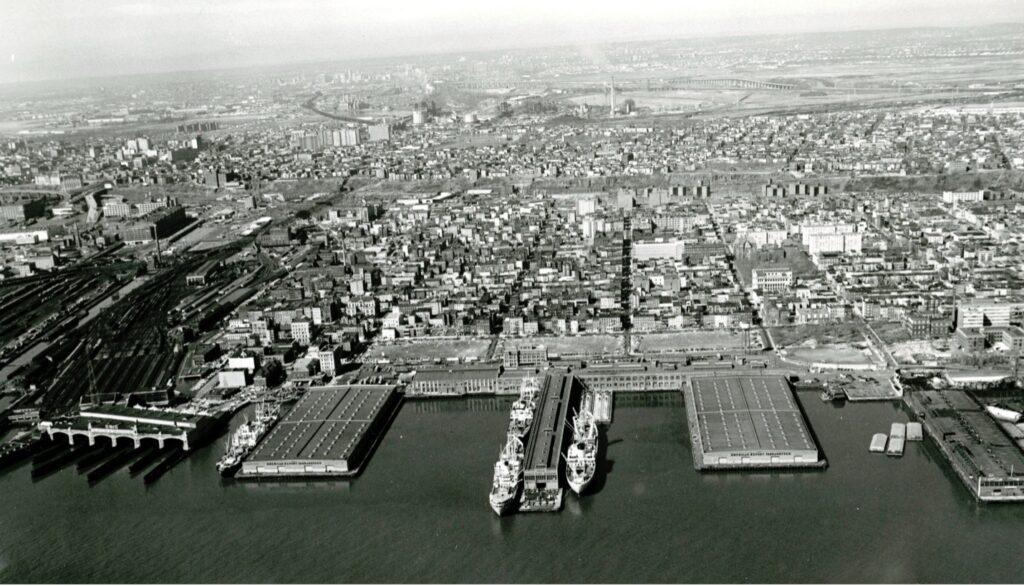
Hoboken was once a booming seaport: ocean liners, freighters, tugs and barges, piers and shipyards. And immigrants, wartime soldiers, seamen, movie stars and even kings and queens! But it has, of course, all changed – that era is long gone.
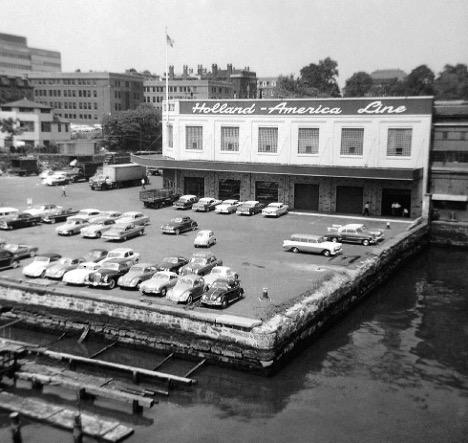
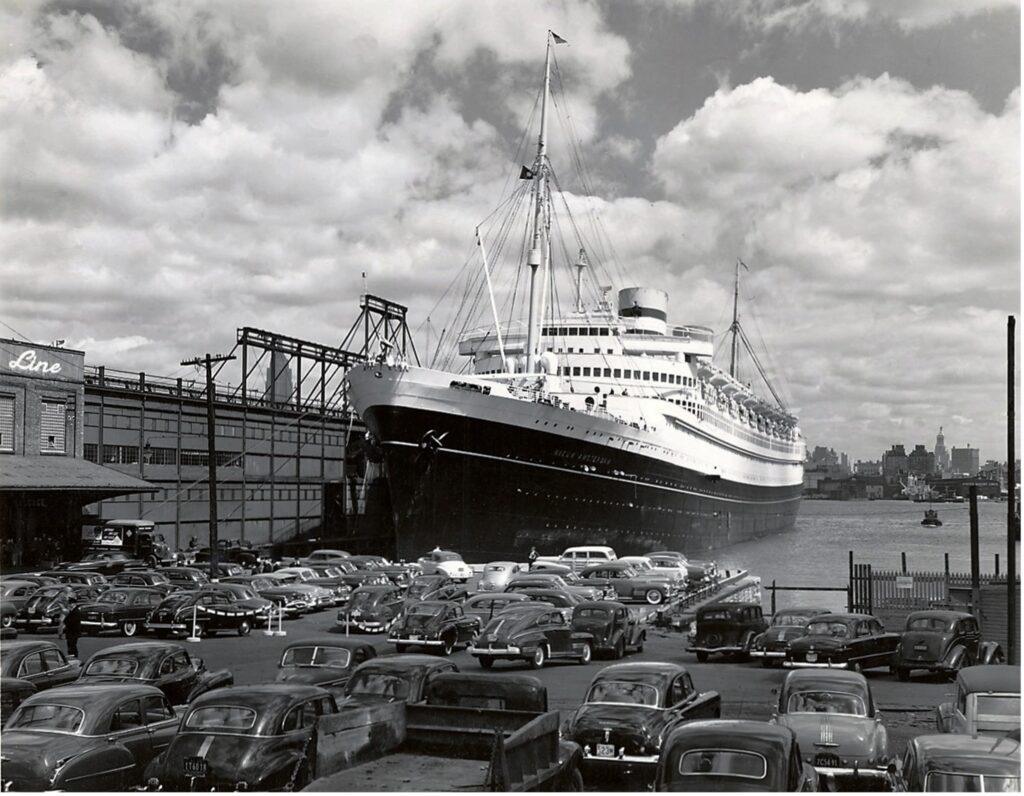
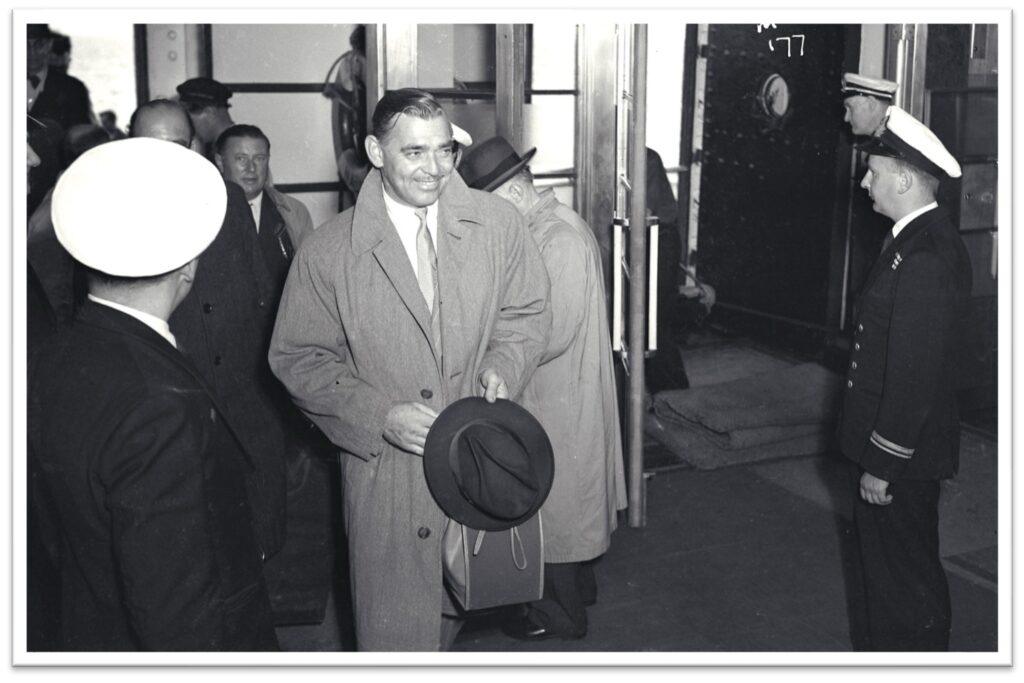
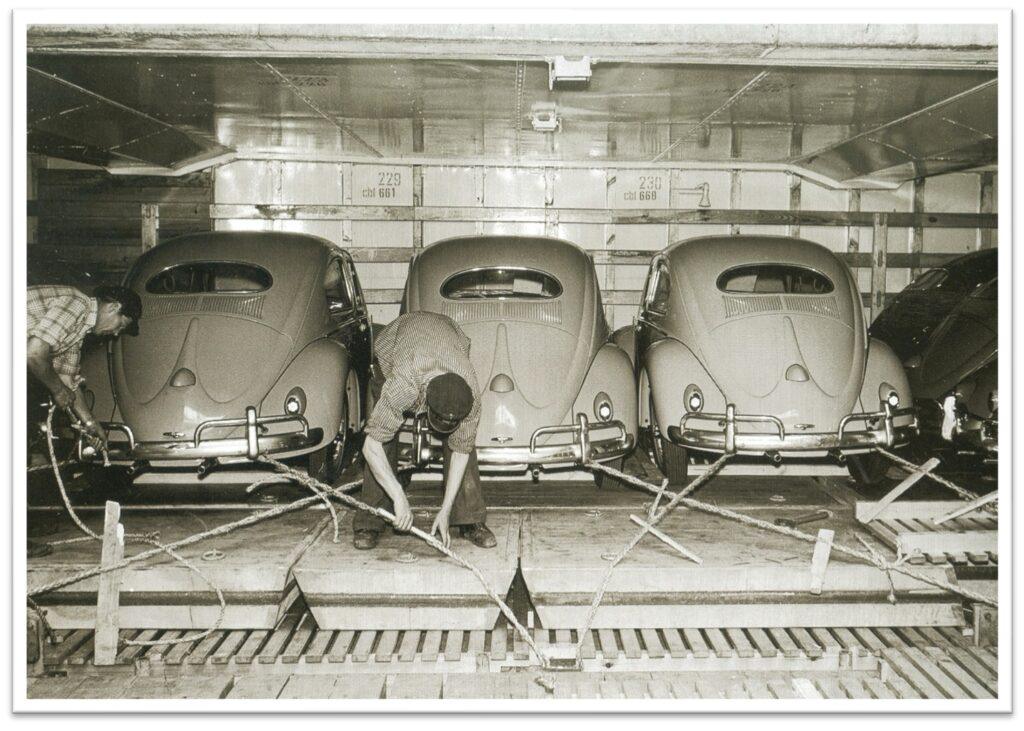
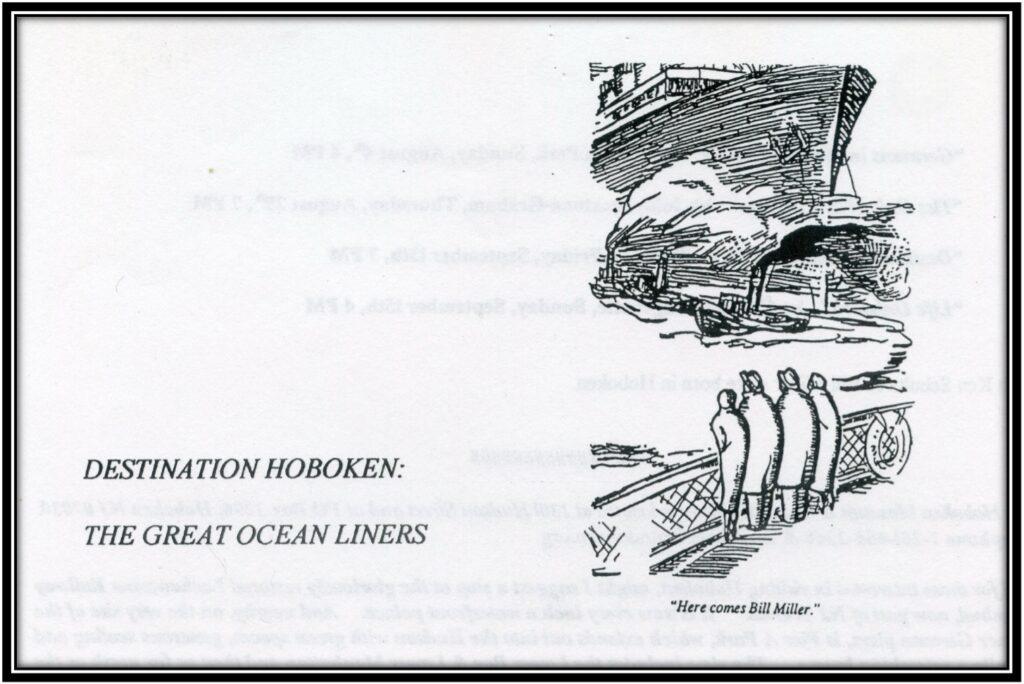
Holland America Line’s Fifth Street Pier in Hoboken in 1960, with parked cars filling the waterfront terminal apron. From the William H. Miller Collection. Holland America Line’s Fifth Street Pier in Hoboken, 1949. From the William H. Miller Collection. Clark Gable arrives in Hoboken before sailing to Europe. From the William H. Miller Collection. Workers release the transport lashings from the first Volkswagens to arrive in the United States, at Hoboken in 1949. From the William H. Miller Collection. Hoboken’s working waterfront in 1971, with passenger piers, ships and rail yards lining the Hudson River. From the William H. Miller Collection. A whimsical “Destination Hoboken” illustration shows onlookers awaiting an ocean liner—and Bill Miller. From the William H. Miller Collection.
Visit
“As a schoolboy (in 1967), we had a school trip and visit to the Queen Mary at Southampton,” remembered Martin P. “The ship was beautiful. And wondrous – it seemed so large! Today, I am so grateful for that trip. The ship was retired a few months later. Now, I had a chance [in Los Angeles] to revisit that great ship – nearly 60 years later.”
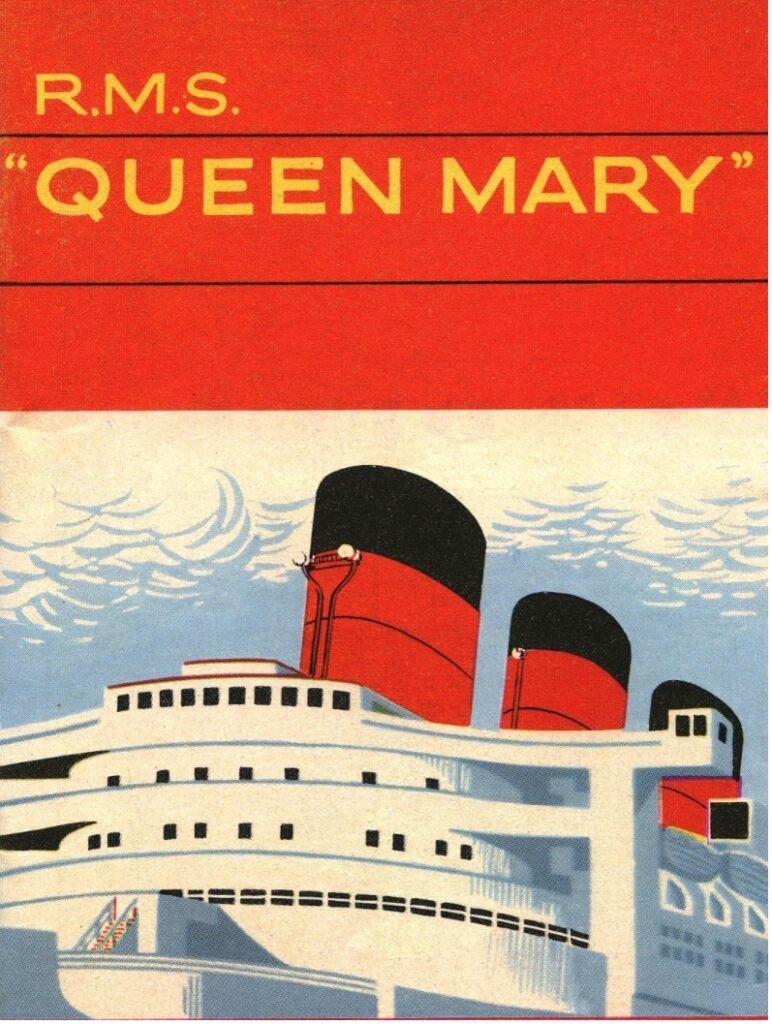
The preserved Queen Mary at Long Beach, with one of the liner’s lifeboats displayed alongside. From the William H. Miller Collection. Vintage promotional artwork for Cunard’s RMS Queen Mary, highlighting the liner’s three funnels and tiered superstructure. From the William H. Miller Collection.

Wartime Voyages!
“My father went to war, to Europe, in 1944. And he sailed over with 1000s of other GIs on the Queen Mary,” noted Mary S. “He was seasick, sometimes very seasick, for almost the whole voyage. He told me he was ready to die before even seeing battle. After a year and a half, he returned to New York – coincidentally again on the Queen Mary. And again, he was seasick!”

Good Fortune
Mary Alice G. made the final crossing on the QE2 back in Oct. 2008. She noted, “It was my favorite ship and I just had to do the final sailing. We sailed together with the Queen Mary 2. I like the Queen Mary 2 very much, but the QE2 was different – along with the décor and furniture, it was a ship that had a soul. Lovingly, the QE2 ‘welcomed’ you!”

Lives of the Liners: ORONTES
To reinforce its position on the long-haul UK-Australia run, the London-based Orient Line added a series of five, twin-funnel liners that were among the finest and largest of their time in the trade Down Under.

Built by Vickers at Barrow, the 664-ft long Orontes was the last of them when completed in the summer of 1929. Used on the London-Suez-Melbourne-Sydney run, she had accommodations for 500 passengers in first class and some 1,112 in third class. Used an Allied troopship during World War II, she resumed Australian service in 1948 until broken-up in Spain in 1962.

The Orontes also ran summertime cruises from London or Southampton to Norway, the Northern Cities, the Mediterranean, Spain and Portugal and the Atlantic Isles. 14 days beginning from £14 (or $65 in 1935).


