Veendam, QE2, Arcadia & From Southampton Aboard Liners
Anniversary
Holland America Line is commemorating 100 years of Caribbean cruising, begun with the Veendam to the Caribbean from New York back in 1926.

Holland America Line’s Veendam at Hoboken in the 1920s. Courtesy of the William H. Miller Collection. After-dinner dancing aboard a Holland America ship in 1928. Courtesy of the William H. Miller Collection. Poster promoting Volendam and Veendam Caribbean cruises. Courtesy of the William H. Miller Collection.


Crossing
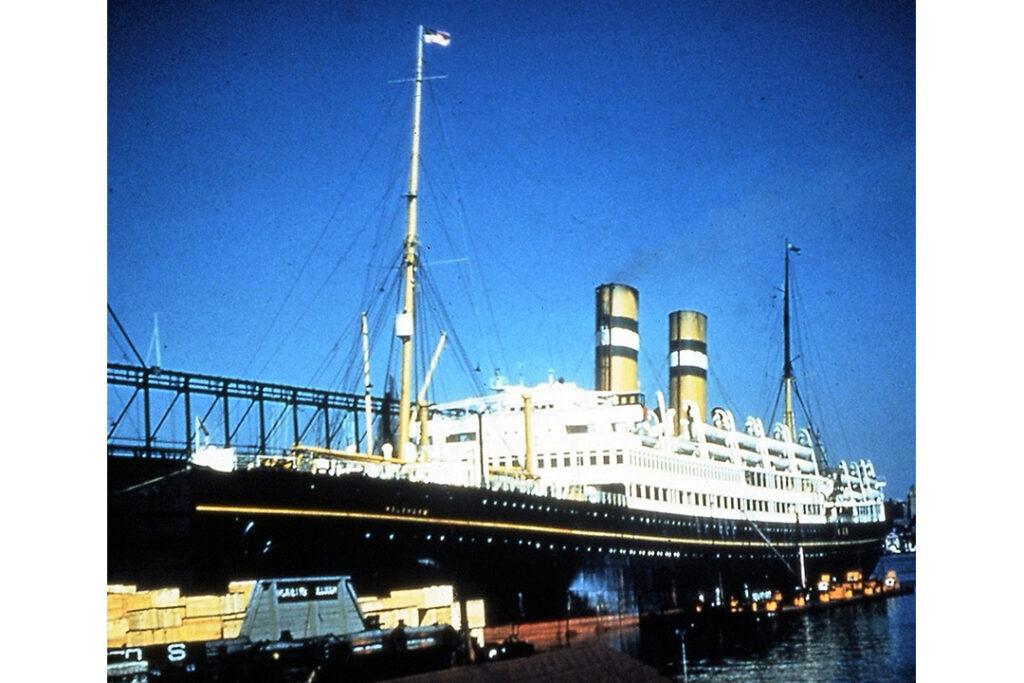
A long-ago school friend reminded me that his family emigrated from England to the USA back in 1958. They sailed from Southampton on the Greek Line, onboard the veteran liner New York. The ship dated from 1922 and had been the Tuscania of the Anchor Line but, in 1939, became the Greek Line’s very first ship, the Nea Hellas.

Cunard Service
A fellow passenger told me that her father worked as a waiter for Cunard back in the 1950s. He added: “He served in both the Queen Mary and Queen Elizabeth, but much preferred the Mauretania, which was slightly smaller and slower.”

Crossings
“My first cruises were typical – 7 to 10 days, usually in the Caribbean,” recalled fellow guest Mary Ellen W. “I started on ships like the Carnivale, Regent Sea, Stella Solaris and Amerikanis. But then a friend convinced me to take an Atlantic crossing – on the QE2. From then on, I loved trips of all sea days, going only from one port to another, A to B. I had so much more onboard time – for reading, chatting, listening to lectures and afternoon tea. I’m now up to about 25 crossings and of course have moved on to the Queen Mary 2. Every time I do a New York-Southampton voyage, I book another – and usually onboard.”

Worldwide
“My father sailed as an engineer for the P&O Lines for about fifteen years,” remembered fellow cruise passenger Tim N. “He had lots of adventures and lots of stories – and was very loyal to P&O. He actually began his maritime career with another British company, the Blue Star Line, but soon transferred over to P&O. Often, he sailed on the long line voyages, UK to Australia through Suez and often by way of India and with a stop at Ceylon. I still have his discharge book with dates and official stampings of the ships he sailed aboard. He began on some older ships – the Strathmore and Stratheden – and later, in the 1950s, he joined the Himalaya, Arcadia and Iberia. He also did one or two trips to the Far East, to Singapore, Hong Kong and Japan, in the Chusan.“
“Later, he joined the Orcades, Oronsay, Orsova and finally the Oriana. He never did the Canberra, however. For whatever reason, as I remember, the Orsova was his favorite, his preferred assignment. But when he finally retired and left the sea, in the early 70s, it was all changing. P&O Lines became P&O Cruises and those traditional line voyages out to Australia were all but gone. Yes, my father was loyal to P&O and their great liners – and had a great career!”

Around-the-World
“As a boy still at school (on Long Island), we traveled into New York, across to Jersey City,” recalled Jack B. “My grandmother was sailing on the President Monroe. The year was 1962 and she was departing on a 95-day cruise around the world. The ship was not one of the big ocean liners, but very cozy and comfortable. It carried, as I recall, less than 100 passengers. I suppose you could say it was like a yacht! We had a bon voyage party in my grandmother’s stateroom and afterward waved her off with streamers and music.”

More Memories
Geoff M. grew-up near Southampton in the 1950s and followed the great liners. On a recent cruise, he told me: “Southampton was a ‘fantasyland’ for a ship lover back then. There were ships, especially liners, everywhere – and changing almost every day,” he remembered. “Of course, you had Cunard and the Queens, the United States, Nieuw Amsterdam, Union-Castle and P&O. But two my favorites were both, well, rather unusual, even eccentric ships – the Dutch Willem Ruys and the migrant ship New Australia.”

He added, “The Willem Ruys had two, rounded, all-black funnels and an unusual lifeboat and deck arrangement. In ways, it was very modern.I thought she was very handsome – and, of course, being Dutch, always immaculate.”

Geoff concluded, “The New Australia had been a classic three-funnel liner, the Monarch of Bermuda, but was rebuilt with a single funnel but with a unique dipod mast that served as a second funnel. Smoke came from both. Several times, I saw her and just stared as smoke came from the mast high above the wheelhouse and bridge. Later, I saw her as the Arkadia of the Greek Line.”

LIVES OF THE LINERS: Empress of Japan/Empress of Scotland
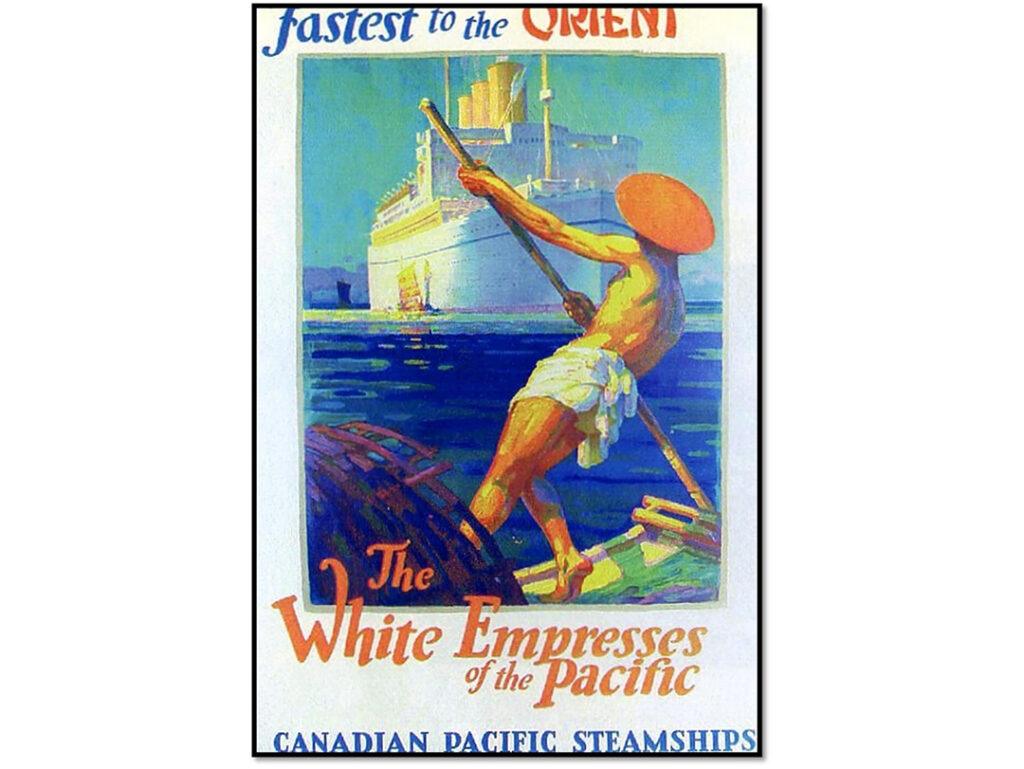
Canadian Pacific Steamships maintained two major liner services: Trans-Atlantic and Trans-Pacific. On the Pacific side, their Empress liners were big, well-run and popular. To reinforce this service, by the late Twenties, the Company ordered the biggest Pacific Empress yet – the superb Empress of Japan. And it had added acclaim: The ship became the fastest liner in Pacific service.
Vintage Canadian Pacific postcard of Empress of Japan. Courtesy of the William H. Miller Collection. Canadian Pacific Steamships advertisement for the “White Empresses of the Pacific.” Courtesy of the William H. Miller Collection.

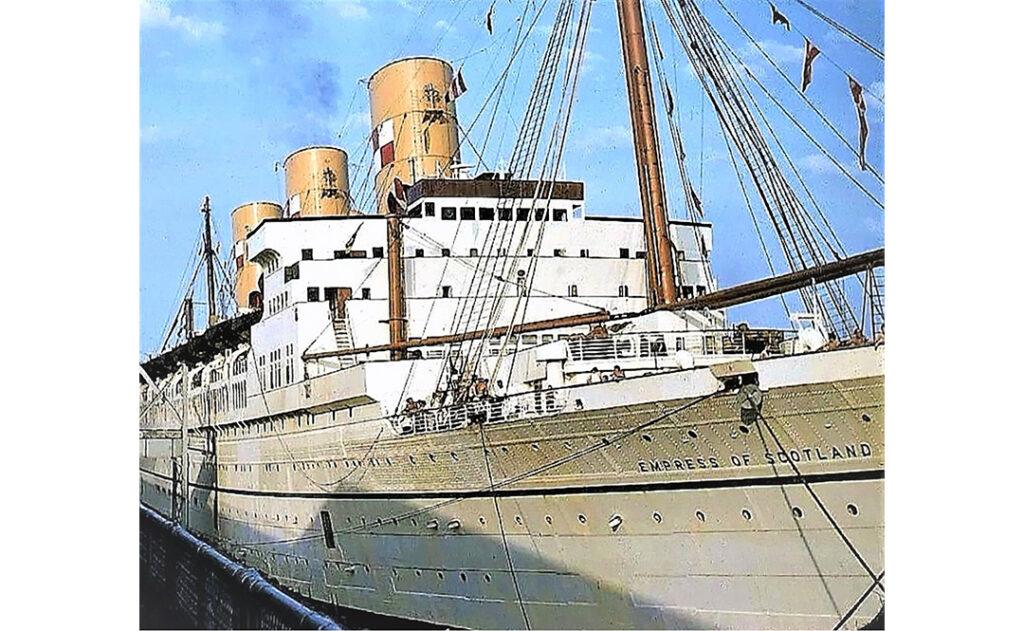
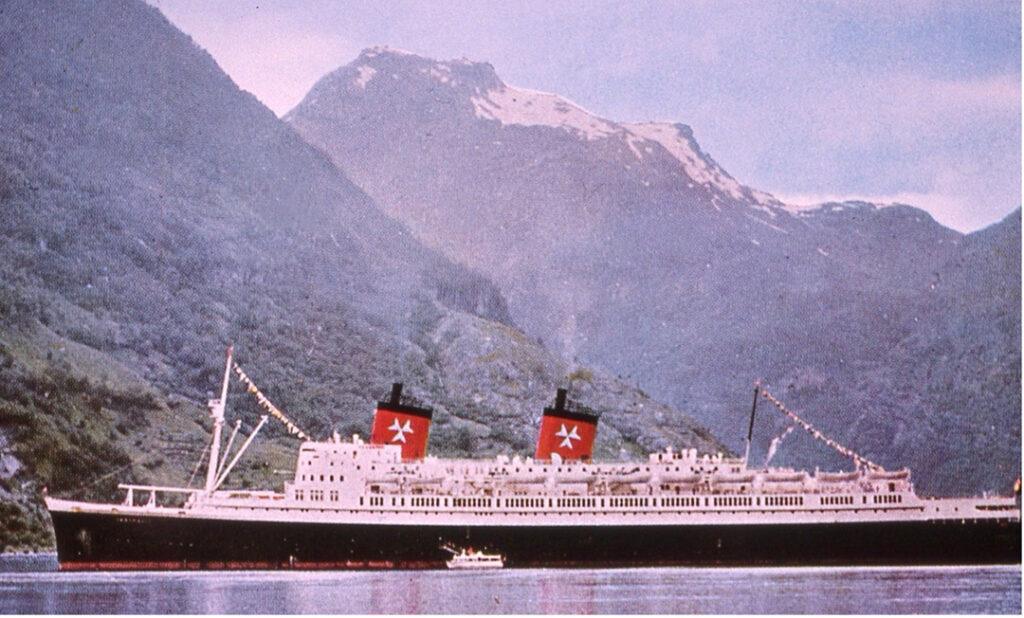
Built at Glasgow, this 26,000-tonner served as a troopship (1939-48) and shown below with another troopship, the Mauretania; it was renamed Empress of Scotland in 1942. Resuming Canadian Pacific service in 1950, but on the North Atlantic run, it was sold in 1957 to the Hamburg-Atlantic Line (West German flag) and renamed Hanseatic.
Empress of Scotland (left) and Mauretania as troopships. Courtesy of the William H. Miller Collection. Empress of Scotland after returning to Canadian Pacific service. Courtesy of the William H. Miller Collection. Hanseatic, formerly Empress of Scotland, after her extensive rebuilding. Courtesy of the William H. Miller Collection.